
A beautiful garden does not have to be expensive, perfectly landscaped, or filled with complicated features. Some of the best garden ideas are simple changes that make an outdoor space easier to use, more comfortable, and more enjoyable to spend time in.
Instead of trying to improve the entire garden at once, focus on how each area can become either more beautiful, more functional, or ideally both.
That might mean adding a small seating area, improving a pathway, using larger planters, adding shade, or creating better outdoor storage.
Here are 12 practical garden ideas that can help you create a space that feels more intentional without making it overly complicated.
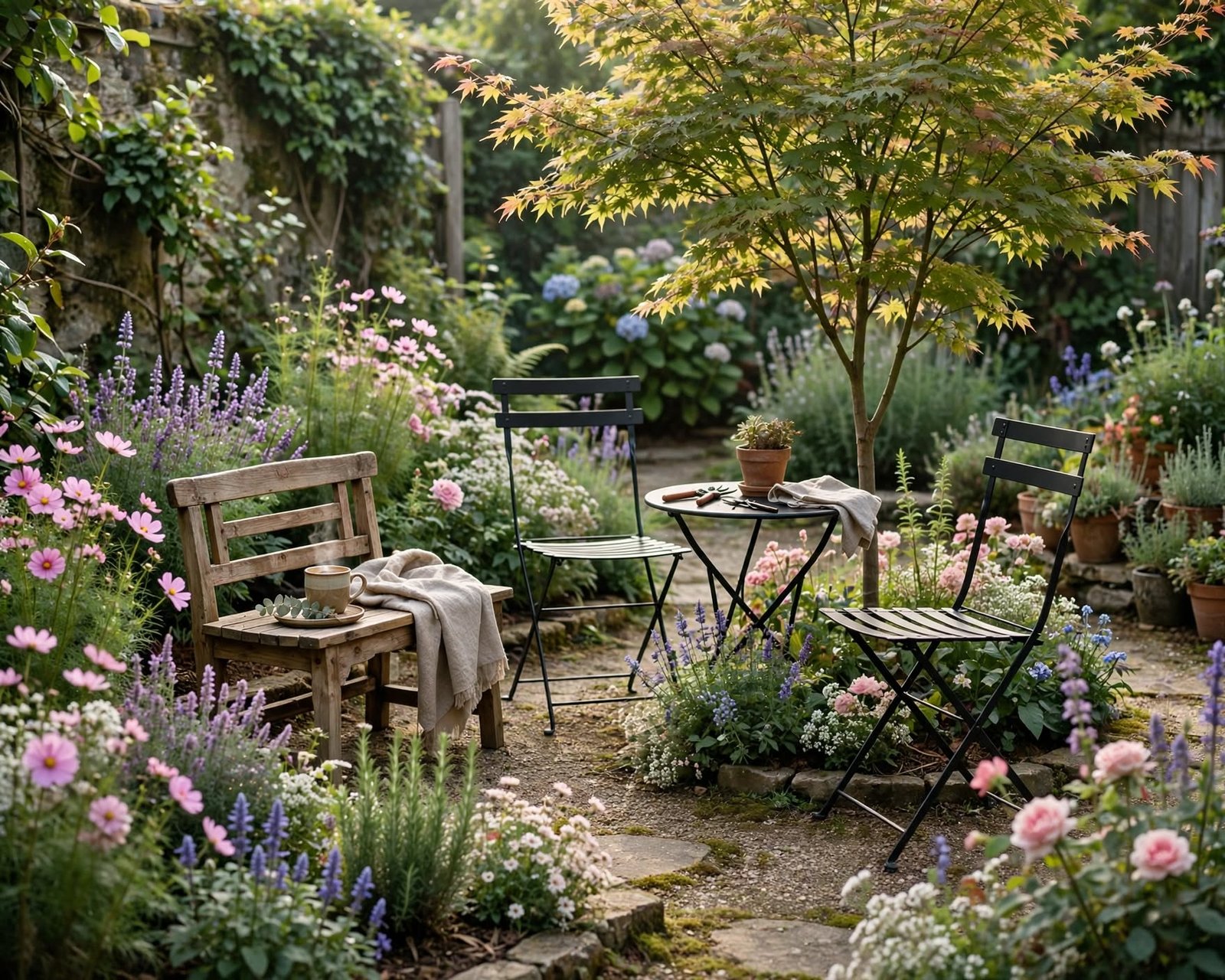
1. Create a Comfortable Place to Sit
One of the easiest ways to make a garden more usable is to create somewhere you actually want to spend time.
You do not need a large outdoor furniture set. A small bench, a pair of garden chairs, or a compact bistro set may be enough.
Choose a location with something pleasant to look at, such as a flower bed, tree, vegetable garden, or quiet corner.
For smaller gardens, look for furniture that does not visually overwhelm the space. Folding chairs, slim metal furniture, and benches with built-in storage can work especially well.
A seating area changes a garden from somewhere you simply look at into somewhere you can actually enjoy.
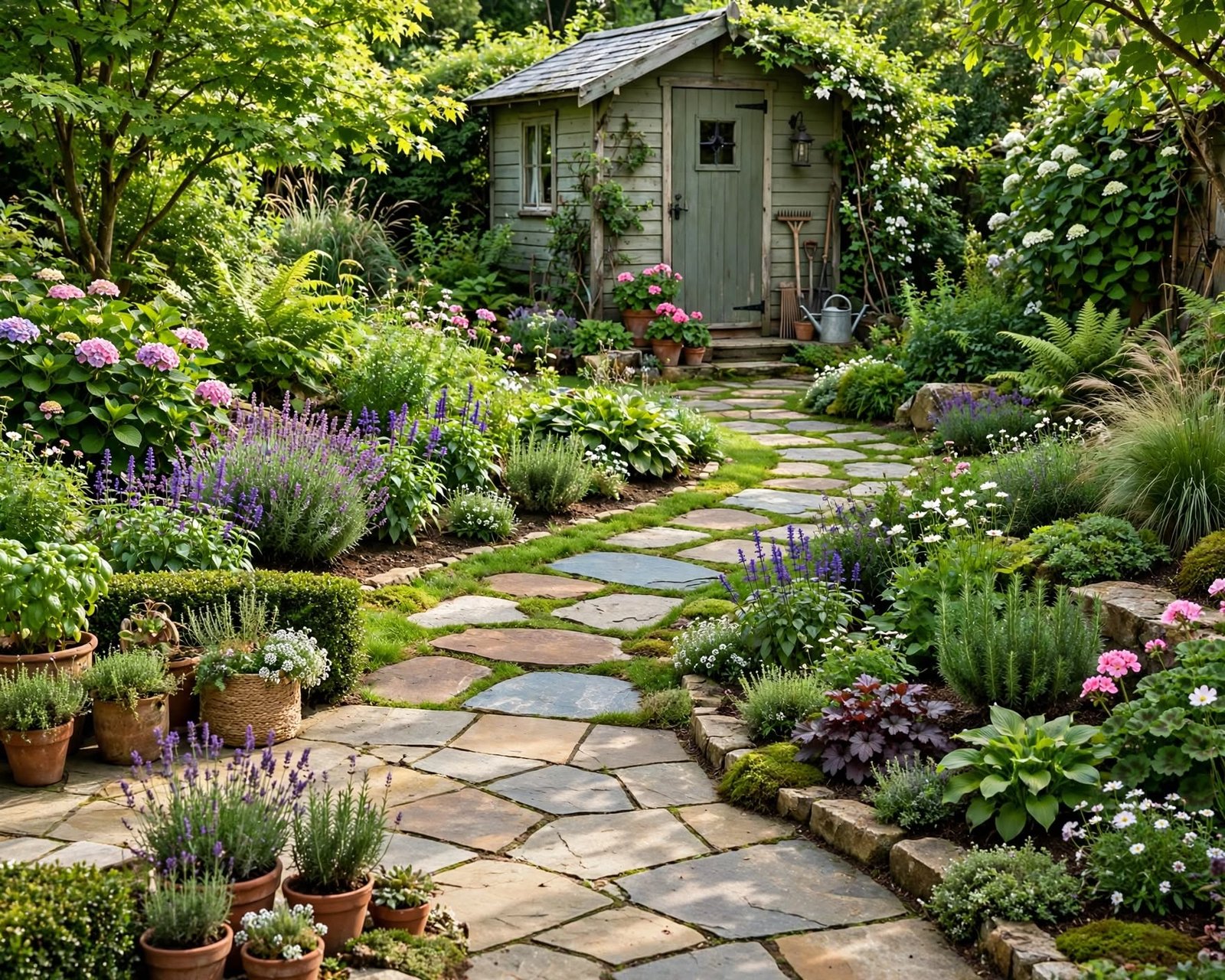
2. Define the Space With Garden Paths
Garden paths help organize an outdoor space and make it easier to move between different areas.
They can connect a patio with a garden bed, seating area, shed, vegetable garden, or gate.
Depending on your style and budget, paths can be created with:
- stepping stones
- gravel
- brick
- mulch
- flagstone
- concrete pavers
Curved paths tend to feel softer and more natural, while straight paths create a more structured look.
Even a short pathway can make a garden feel more thoughtfully planned.
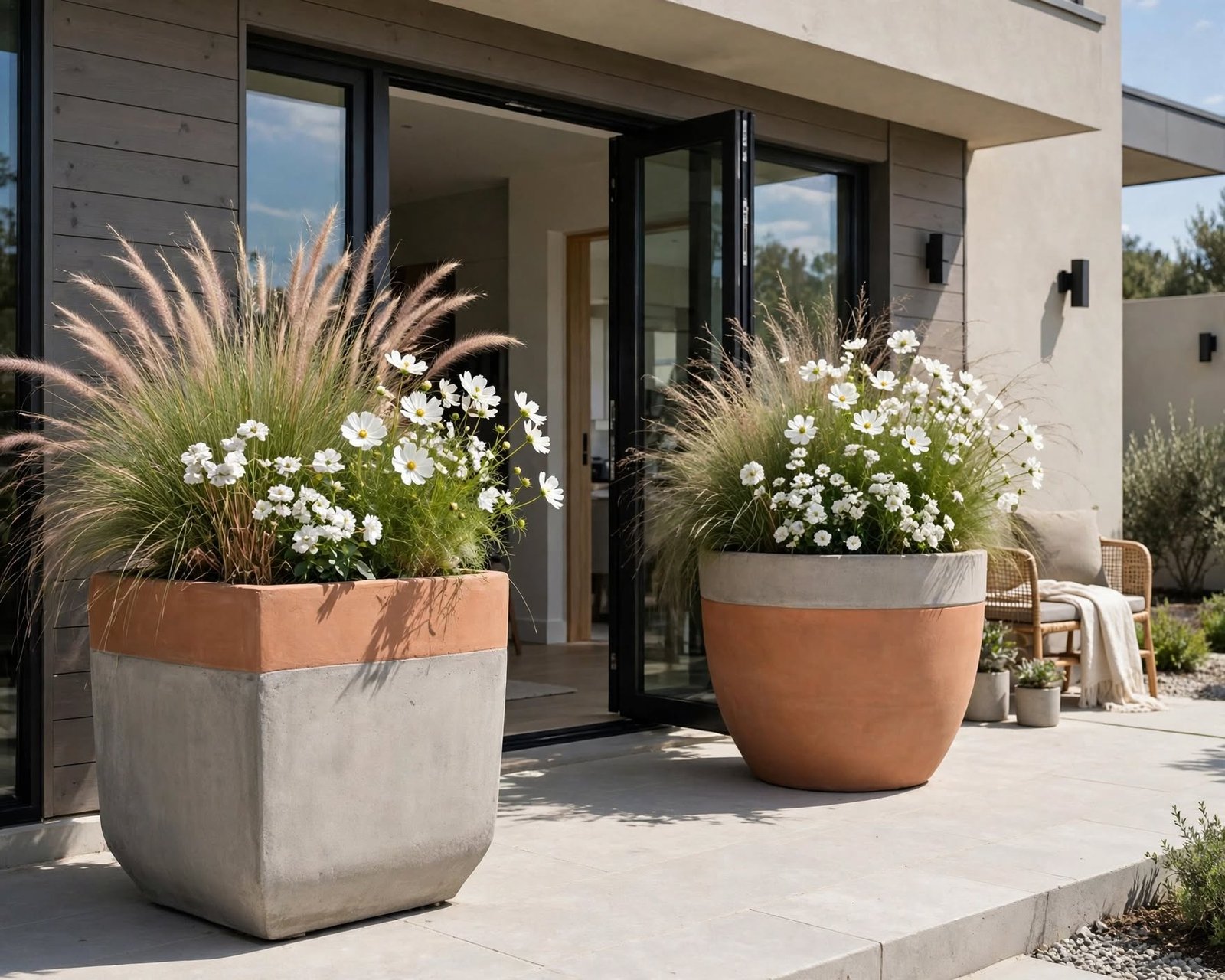
3. Use Large Planters as Focal Points
Instead of filling the garden with many small pots, consider using a few larger planters.
Large containers can create stronger visual impact and make an outdoor area feel more organized.
They work especially well near:
- patios
- entrances
- seating areas
- garden gates
- outdoor stairs
You can fill them with ornamental grasses, herbs, flowers, compact shrubs, or small trees.
Repeating similar planter materials or colors throughout the garden can also help different areas feel connected.
Planters are particularly useful for renters or anyone who wants flexibility because they can be moved as the garden changes.
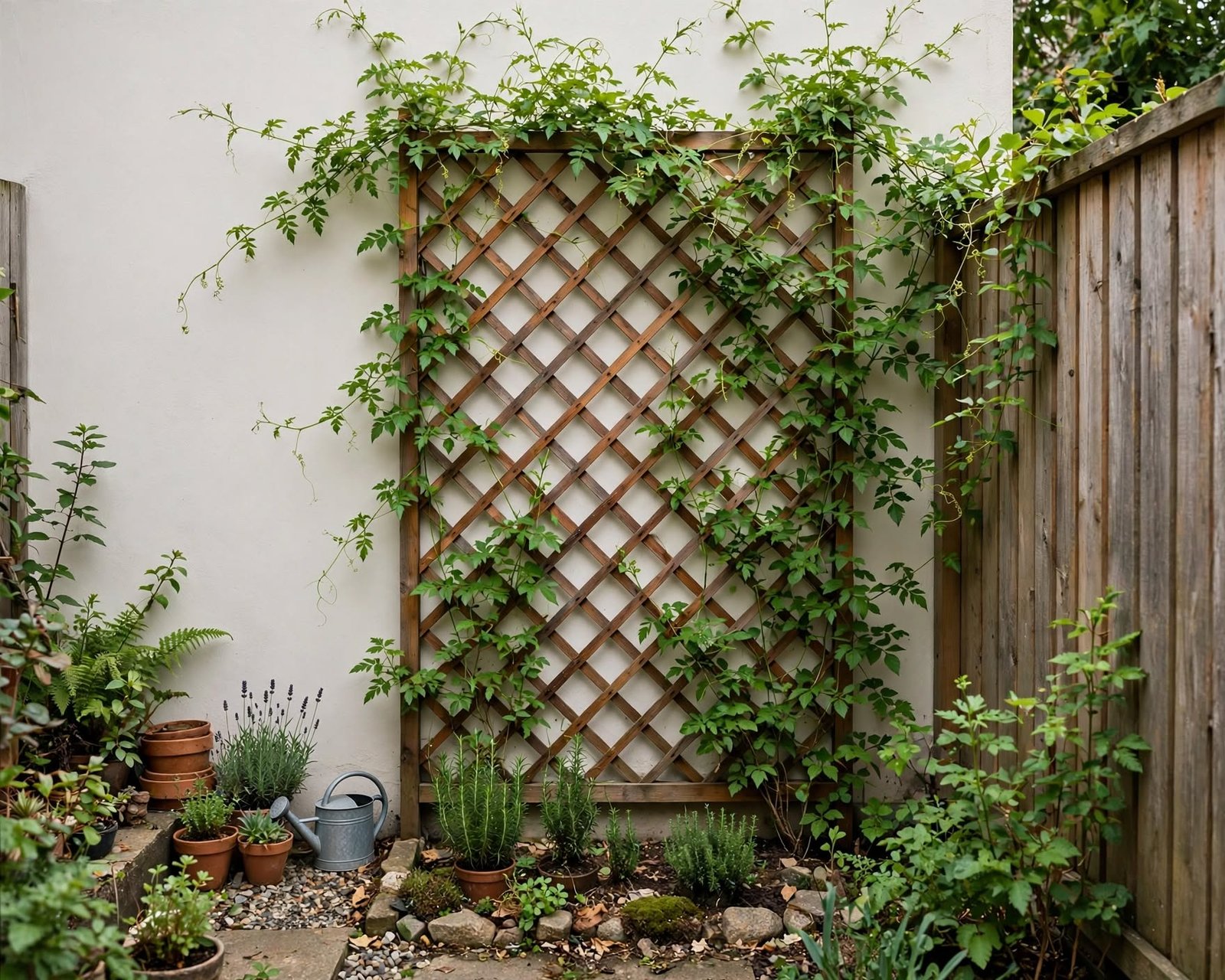
4. Add Height With Trellises and Climbing Plants
If most of your garden stays close to ground level, adding vertical elements can make the space feel more interesting.
A trellis can be placed against a wall, beside a fence, or inside a planting bed.
Climbing plants can eventually soften the structure while creating extra greenery without using much ground space.
This makes trellises especially useful in smaller gardens.
They can also help disguise plain walls, fences, or utility areas that you would rather not make the focus of the space.
5. Create One Small Garden Corner
You do not need to redesign the entire yard to make a noticeable difference.
Choose one unused corner and give it a purpose.
It could become:
- a reading area
- a herb garden
- a flower corner
- a pollinator garden
- a small breakfast area
- a container vegetable garden
Starting with one defined area makes garden improvements feel much more manageable.
Once that corner works well, you can use the same approach in other parts of the yard.
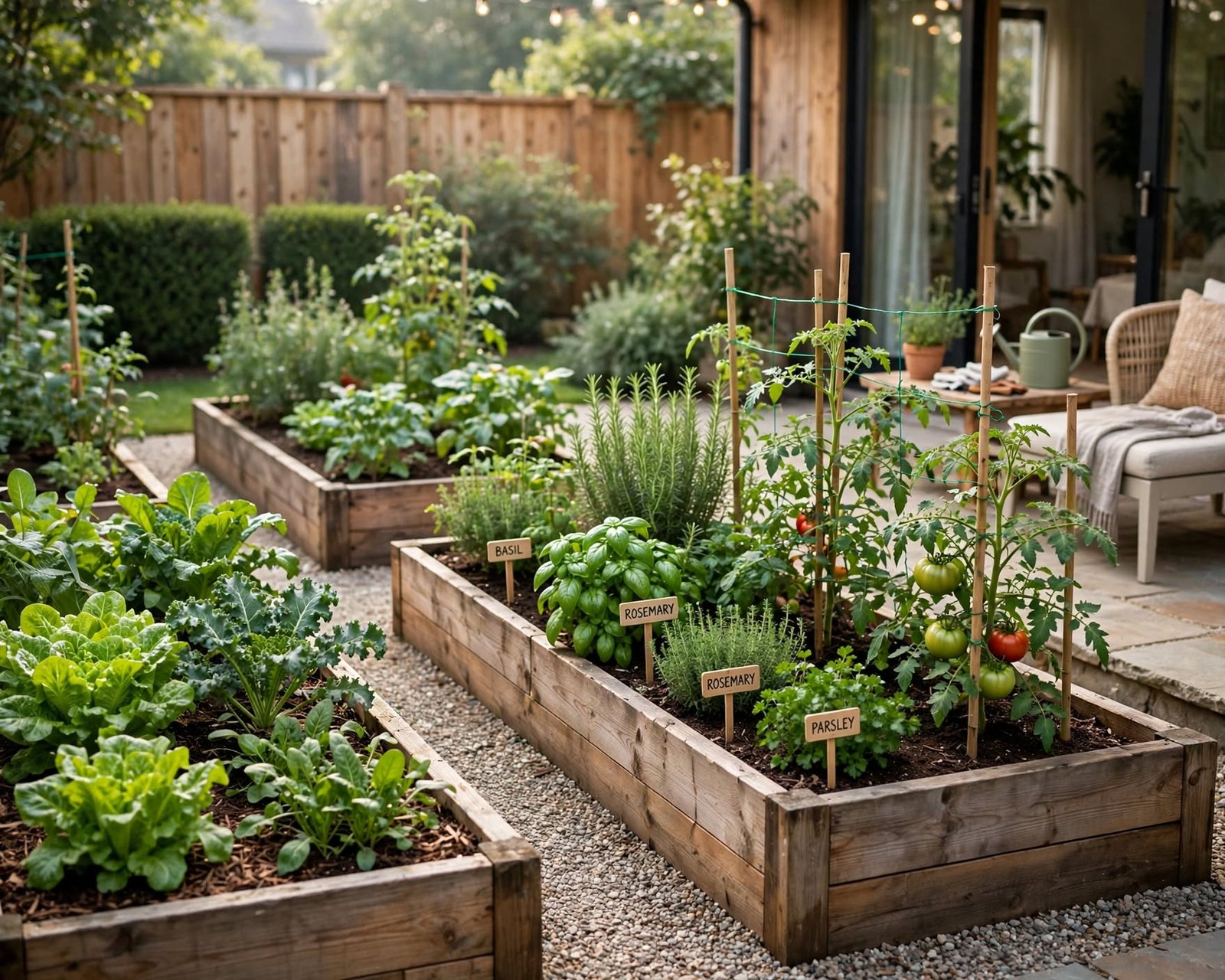
6. Use Raised Beds for a More Organized Growing Area
Raised garden beds can make growing vegetables, herbs, and flowers easier while giving the garden a cleaner appearance.
They create clear boundaries and can make soil management simpler.
Raised beds can be made from materials such as wood, metal, stone, or composite panels.
They work well for growing:
- herbs
- tomatoes
- peppers
- leafy greens
- strawberries
- compact vegetables
If the raised beds are visible from a patio or seating area, choose a material that complements nearby furniture, fencing, or decking.
This helps productive areas feel like part of the overall garden rather than a separate utility zone.
7. Add Soft Outdoor Lighting
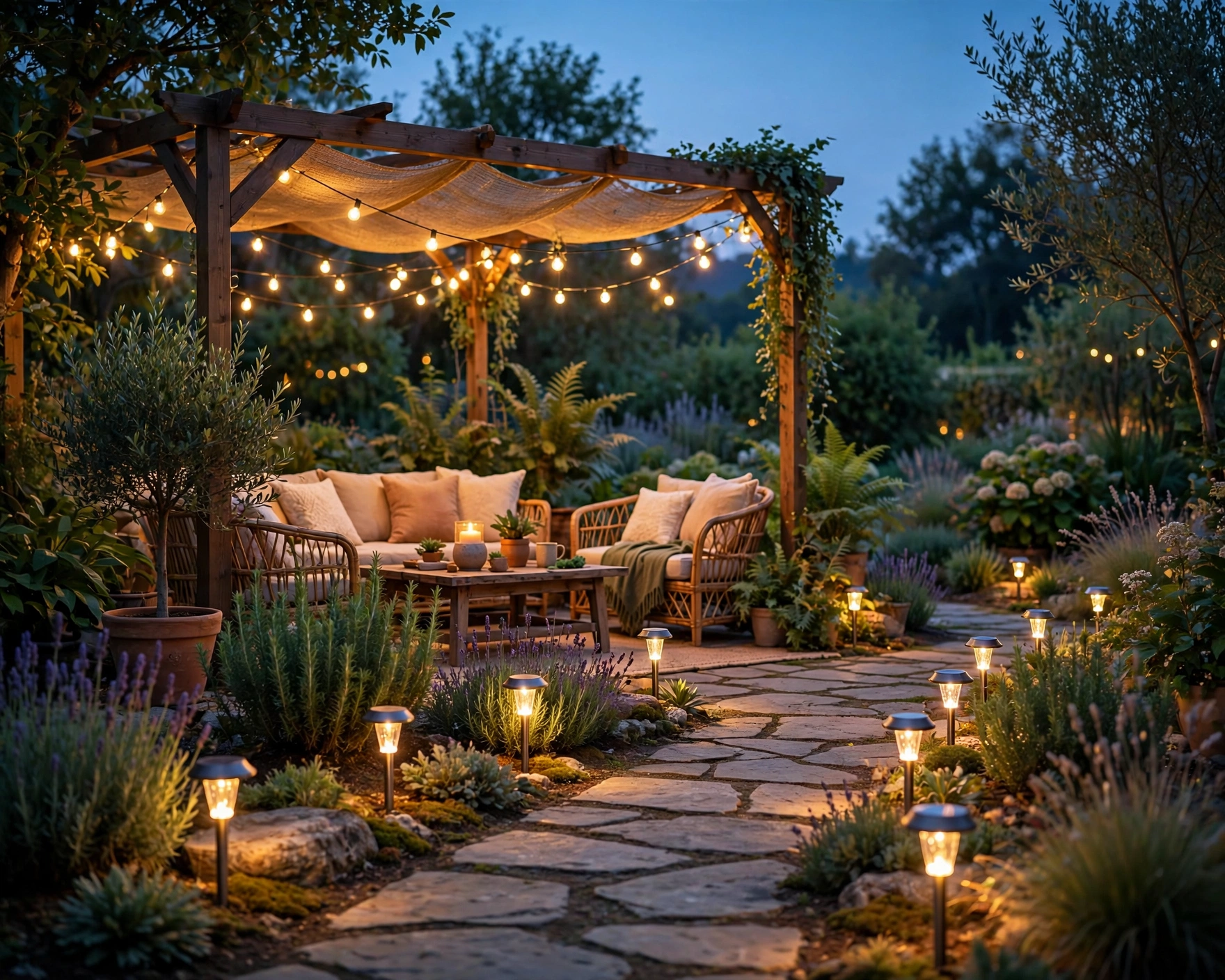
Lighting can completely change the atmosphere of a garden after sunset.
You do not need powerful lights everywhere. Small pools of warm light are often more inviting.
Solar lights are easy to add along:
- pathways
- steps
- planting beds
- seating areas
- fences
- larger planters
Lighting should make the garden easier to navigate while highlighting its shape and important features.
In relaxed garden styles, lights do not always need to be placed in perfectly straight lines. A more natural arrangement often looks better.
8. Layer Plants at Different Heights
Planting beds often look more finished when plants are arranged in layers.
A simple approach is to place taller plants toward the back, medium-height plants in the middle, and lower plants toward the front.
For example:
Back: shrubs, ornamental grasses, or climbing plants
Middle: medium-height flowers and foliage
Front: compact plants and groundcovers
Repeating some of the same plants throughout the garden can create more consistency than using a completely different variety in every spot.
The specific plants you choose should always depend on your local climate, sunlight, soil, and maintenance needs.
9. Create Shade Where You Actually Sit
A beautiful garden may still go unused if it becomes too hot during the day.
Shade can make a seating or dining area much more comfortable.
Depending on the space, you might use:
- a patio umbrella
- shade sail
- pergola
- retractable awning
- climbing plants over a structure
Before installing anything permanent, observe how sunlight moves across the garden.
Sometimes simply moving a chair or table to a slightly different location can make the area much more comfortable.
10. Keep Herbs Close to the House
A herb garden becomes much more useful when it is easy to reach.
Instead of placing herbs at the far end of the yard, keep them near the kitchen door, patio, or outdoor cooking area.
Herbs can be grown in:
- pots
- raised beds
- window boxes
- vertical planters
- railing planters
Keeping frequently used herbs nearby makes them easier to water, harvest, and maintain.
It is also an easy way to add greenery to a patio or small outdoor space.
11. Hide Outdoor Clutter With Better Storage
Even attractive gardens can quickly feel messy when tools, hoses, cushions, toys, and watering equipment are left visible.
Outdoor storage can solve this without taking up too much space.
Useful options include:
- storage benches
- deck boxes
- narrow outdoor cabinets
- wall hooks
- garden tool organizers
Multi-purpose furniture is particularly useful in smaller gardens.
For example, a storage bench can provide both seating and a place to keep outdoor cushions or gardening supplies.
When practical items have a designated place, plants and garden features become the focus again.
12. Leave Some Space Empty
One of the easiest mistakes to make is assuming every empty area of the garden needs something added to it.
It does not.
Open lawn, gravel, patio space, or visible mulch can provide visual breathing room.
This is especially important in small gardens, where too many pots, decorations, furniture pieces, and plant varieties can make the space feel crowded.
Before adding something new, ask:
Will this make the garden more beautiful or more useful?
If the answer is neither, leaving the space open may be the better choice.
How Can You Make a Garden Look More Beautiful?
A beautiful garden usually depends more on structure and consistency than on expensive decorations.
Start by focusing on a few basics:
- keep pathways clear
- define planting beds
- repeat a few plants or materials
- use different plant heights
- reduce visible clutter
- create one main focal point
- provide somewhere comfortable to sit
Small decorative details can then be added gradually.
This approach usually creates a calmer and more cohesive garden than filling the space with many unrelated features.
What Can Make a Garden Look Cluttered?
Gardens often begin to feel messy when too many materials, colors, pots, and decorative objects compete for attention.
Common problems include mismatched containers, overcrowded furniture, too many garden ornaments, visible tools, and planting without a clear structure.
Everything does not need to match, but repeating a few colors, shapes, or materials helps different areas feel connected.
Simple garden edging can also make planting beds look cleaner and more finished without requiring major landscaping work.
Which Garden Features Are Worth Investing In?
The best garden purchases are usually the ones that solve a real problem or help you use the outdoor space more often.
For many gardens, useful investments include comfortable seating, shade, outdoor lighting, quality planters, storage, and reliable gardening tools.
A product is usually more valuable when it makes the garden easier to use rather than simply adding another decorative object.
This is also a useful rule when planning future improvements: prioritize function first, then add decoration around it.
Final Thoughts
The most effective garden ideas are often surprisingly simple.
You do not need to transform the entire yard at once. Start with one problem area and make it work better.
Add a comfortable chair. Define a pathway. Group scattered pots together. Create shade over the area you use most. Hide garden tools. Add lighting along a walkway.
These small improvements can gradually turn an ordinary outdoor space into somewhere that feels more attractive, organized, and enjoyable to use.
A successful garden is not simply beautiful to look at. It should also feel comfortable, practical, and suited to everyday life.
✅ Last Updated on October 4, 2026 by BIG Smart Team