
A backyard can be large enough for a table, a garden, and a place to relax yet still sit empty most of the year. Harsh afternoon sun makes the patio uncomfortable, worn routes turn muddy after rain, and plants added one at a time never make the space feel finished.
The most useful landscaping ideas begin with how the yard needs to work. Instead of filling every open area, create shade where people naturally gather, establish a firm route between doors and activity zones, and plant only what the site can support.
1. Map Sun, Water, and Everyday Routes
Before buying plants, watch the yard in the morning, at midday, and in the late afternoon. Mark where shade moves, where rainwater remains, and where people already cut across the grass. Also locate gates, hose connections, utility equipment, and areas that must remain accessible.
A rough plan on graph paper helps reveal whether a proposed dining space blocks a route or a new bed sits in the wettest part of the yard.
[Affiliate Link: outdoor measuring tape]
[Affiliate Link: landscape graph paper notebook]
2. Choose One Primary Use
A modest yard becomes crowded when it is expected to hold a full dining room, fire pit, play area, vegetable garden, and lounge. Decide what would make you step outside most often.
That might be:
- A shaded table for meals
- Two comfortable chairs for reading
- A clear lawn for play
- Raised beds for herbs and vegetables
- A quiet bench surrounded by plants
Give the primary use the best position and let smaller features support it.
3. Put Shade Where It Will Actually Help
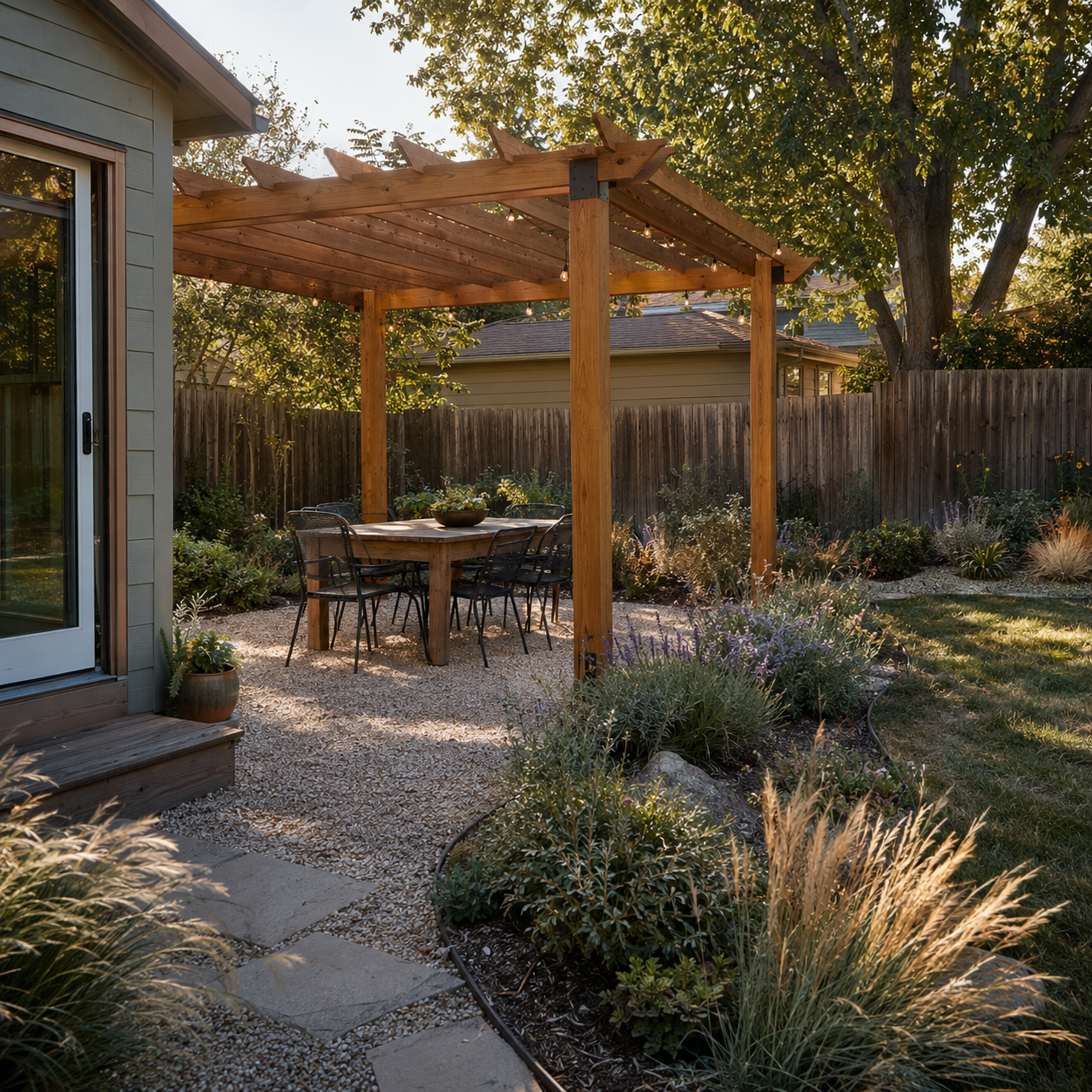
An umbrella or shade sail works only when its shadow covers the seats during the hours you use them. Test the location with temporary chairs before installing anything permanent.
A freestanding umbrella offers flexibility. A shade sail needs safe, properly engineered anchor points and enough slope for rain to drain. A pergola creates structure but may require permits, footings, or professional installation. Never attach a shade product to a fence or building component that was not designed for the load.
[Affiliate Link: tilting patio umbrella with weighted base]
[Affiliate Link: UV-resistant shade sail]
4. Build a Firm Route Through the Yard
Repeated foot traffic compacts soil and creates muddy strips. Connect the back door, gate, seating area, shed, and garden with one obvious path rather than several disconnected stepping stones.
For a permeable route, consider gravel, spaced pavers, or wood chips over properly prepared ground. The best surface depends on drainage, slope, local climate, accessibility needs, and how equipment must move through the yard.
[Affiliate Link: heavy-duty landscape rake]
[Affiliate Link: reusable pathway edging]
5. Turn the Hottest Edge into a Resilient Border
A sunny fence line can become a heat trap. Instead of trying to maintain thirsty lawn against it, use plants suited to the exposure and soil. Repeat a small palette in broad groups so the border looks intentional even when individual plants are between bloom periods.
Combine contrasting forms: low evergreen structure, rounded flowering plants, and fine-textured grasses. Check mature width before planting so airflow and access are preserved.
[Affiliate Link: soil thermometer]
[Affiliate Link: drip irrigation starter kit]
6. Use Layered Planting for Privacy
A single row of identical tall shrubs can feel like a wall and may create a major pruning job later. Where space allows, layer one small tree or tall shrub with medium shrubs and lower perennials.
Place screening where the view matters—from a chair or interior window—rather than planting the entire boundary. Confirm local height restrictions and keep plants clear of utilities, neighboring property, and overhead lines.
[Affiliate Link: compact binocular laser distance meter]
[Affiliate Link: bypass pruning shears]
7. Make a Narrow Yard Feel Intentional
In a long, narrow space, lining every feature against the fences can exaggerate the corridor effect. A gently curving path, an offset bench, or a bed that widens in one area can slow the view and create a destination.
Keep the route comfortably wide and avoid plants that flop into the walking area. One material repeated from the entrance to the end of the yard will make the layout feel connected.
8. Replace an Unused Lawn Section with a Garden Room
You do not need to remove the entire lawn. Keep the portion that supports play, pets, or open views, then convert the least useful section into a defined sitting or planting area.
Lay out the shape with a garden hose and view it from the house before digging. Generous, simple curves are easier to mow around than several small scallops.
[Affiliate Link: kink-resistant garden layout hose]
[Affiliate Link: half-moon garden edger]
9. Create a Low-Maintenance Garden Path with Sheet Mulching
Between raised beds, plain cardboard covered with a deep layer of coarse wood chips can suppress existing vegetation and reduce mud. Remove tape, staples, labels, and glossy coatings first. Overlap the sheets so weeds do not immediately find gaps.
This method is best for informal garden paths, not surfaces that must carry heavy equipment or provide a firm accessible route. Top up the chips as they decompose.
[Affiliate Link: natural arborist wood chips or pathway mulch]
[Affiliate Link: wide garden cart]
10. Capture Runoff in a Planted Basin
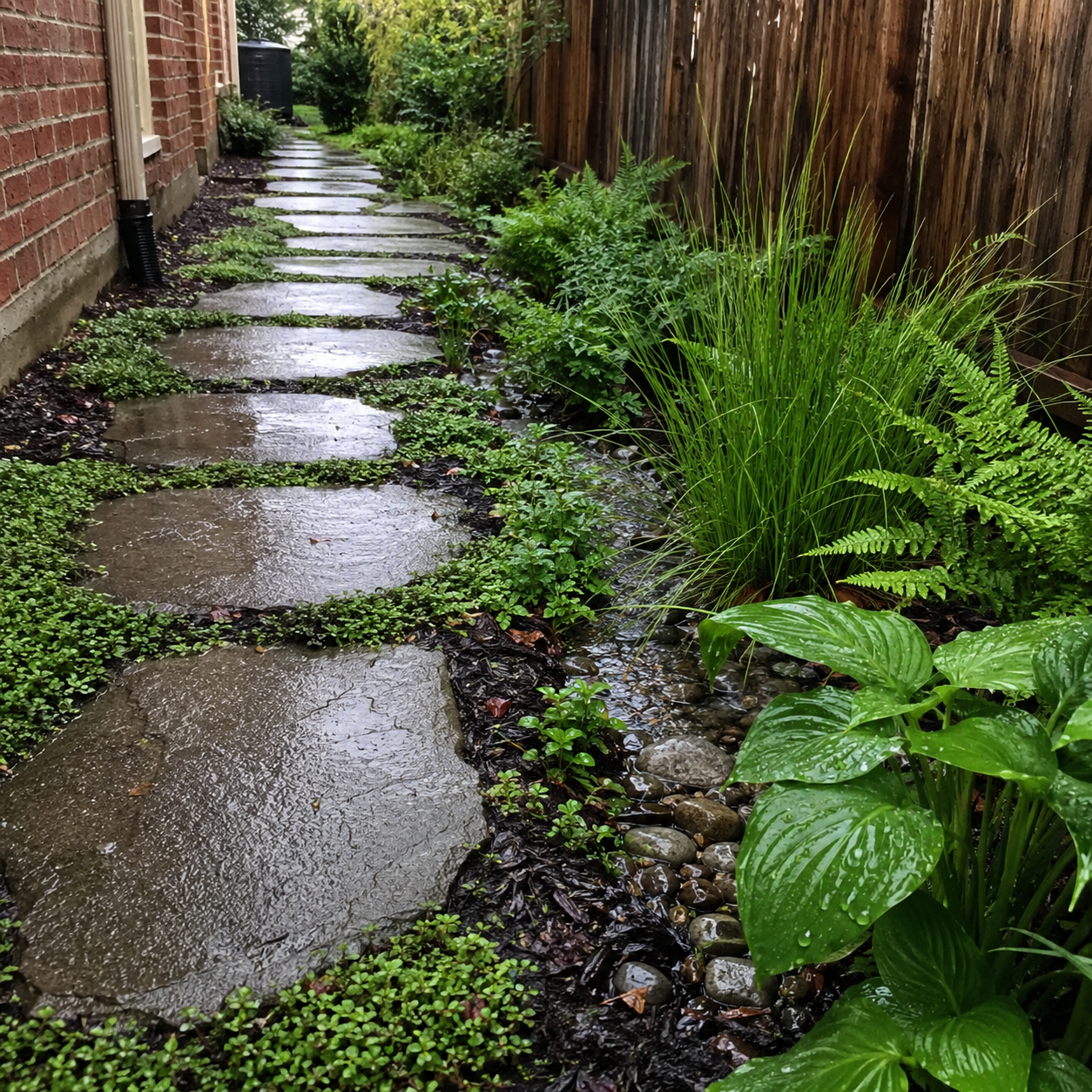
If water flows from a downspout and crosses the yard, do not hide the problem beneath decorative stone. A properly placed rain garden may slow and absorb runoff, but it must drain within an appropriate period and remain safely away from foundations, septic systems, steep slopes, and underground utilities.
Site requirements vary widely. Consult local stormwater or extension guidance before excavating, and use plants suited to both temporary wetness and dry intervals.
[Affiliate Link: flexible downspout extension]
[Affiliate Link: manual rain gauge]
11. Store Tools Where the Work Happens
Pruners, hose fittings, cushions, and small garden tools are more likely to be used when they are dry and close at hand. Choose storage by what actually needs protection rather than buying the largest box that fits.
Place outdoor storage on a stable surface where the lid and doors can open fully. Keep chemicals, fertilizers, sharp tools, and ignition sources secured according to their labels and away from children and pets.
[Affiliate Link: weather-resistant deck box]
[Affiliate Link: locking garden tool organizer]
12. Test the Layout Before Making It Permanent
Use inexpensive placeholders for a week. Mark bed edges with a hose, set chairs where a bench might go, and use temporary stakes to estimate the height of screening plants. Walk the route while carrying a laundry basket, garden cart, or trash bin.
This short test often reveals tight corners, glare, poor shade, and blocked access before money is spent on permanent materials.
A Sensible Order for the Project
- Confirm utilities, boundaries, and local requirements.
- Observe sun, drainage, and foot traffic.
- Select the yard’s primary use.
- Plan safe shade and a continuous route.
- Correct drainage concerns.
- Build hard surfaces and storage bases.
- Prepare beds and irrigation.
- Plant in repeated groups at mature spacing.
- Add furniture only after measuring the finished area.
The strongest landscaping ideas solve discomfort and inconvenience before adding decoration. A cool place to sit, a dry route across the yard, and a few well-planned planting zones can make an ordinary backyard more useful without turning it into a costly, high-maintenance project.
✅ Last Updated on September 28, 2026 by BIG Smart Team