
A front yard can feel unfinished even when the lawn is mowed. Random shrubs, faded mulch, an empty entrance, and poorly defined beds create visual clutter—and buying more plants often makes the problem worse.
The most effective simple landscaping front yard plan uses fewer elements with clearer placement. Concentrate on the bed edges, walkway, entrance, and a limited plant palette before considering major construction.
1. Define One Main Planting Bed
Several disconnected patches are difficult to mow around and rarely look intentional. Combine foundation plants into one continuous bed where possible.
Use a garden hose to test a gentle curve before cutting the new edge. Avoid tight waves that complicate mowing.
2. Refresh Mulch Without Piling It Too Deeply
Fresh mulch makes an established bed look more cohesive while helping reduce moisture loss and soil splash.
Remove weeds first, then apply an even layer. Keep mulch away from tree trunks, shrub stems, siding, and ventilation openings.
3. Repeat a Small Plant Palette
A yard filled with one of everything can look disorganized. Choose a restrained group of plants suited to the site and repeat them.
A simple arrangement might include:
- One small ornamental tree
- Two or three compact evergreen shrubs
- Repeated flowering perennials
- A limited group of ornamental grasses
- Seasonal color near the entrance
Check mature width before planting so shrubs do not cover windows or crowd the walkway.
4. Improve the Front Door with Containers
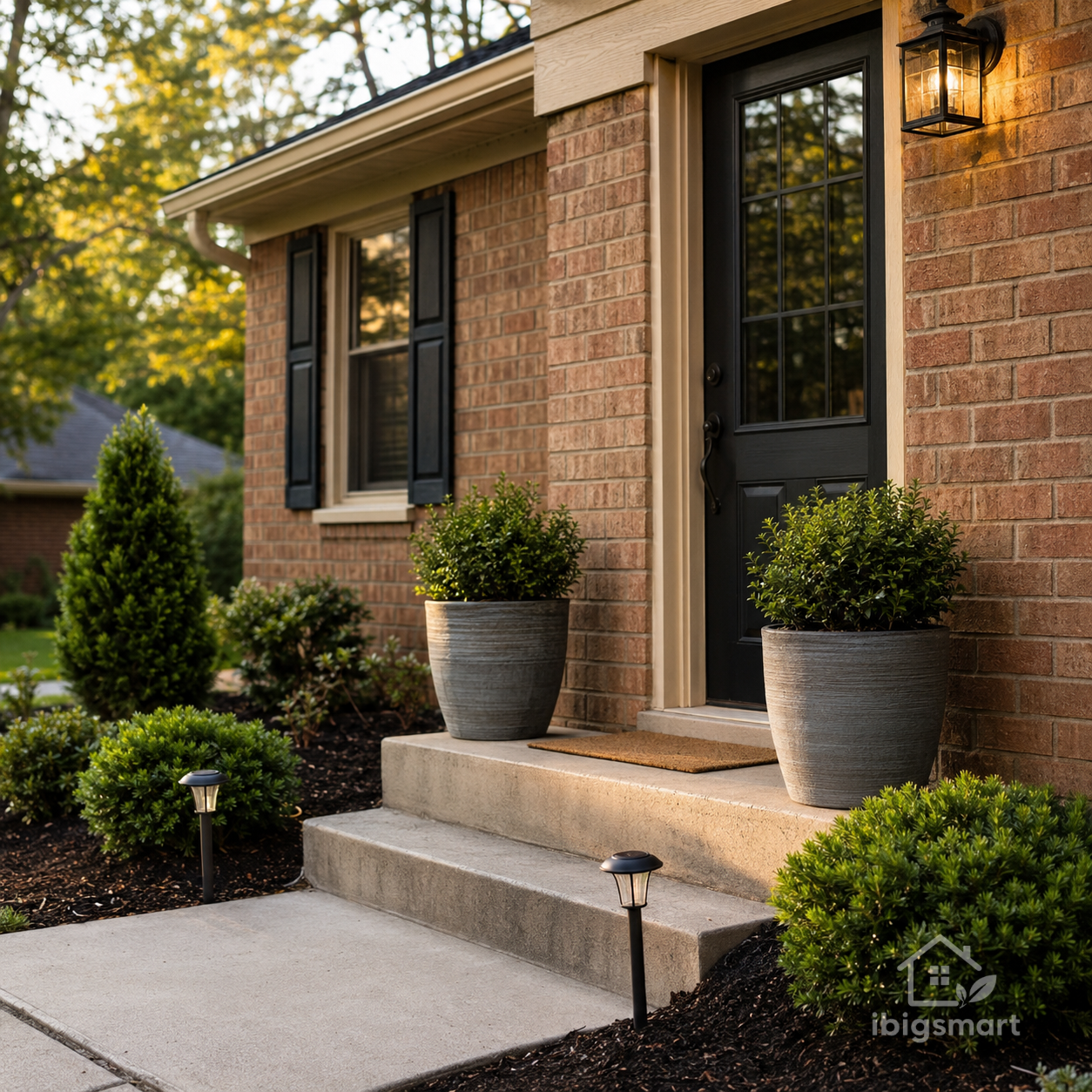
Two matching planters can make an entrance feel deliberate without replacing the entire landscape.
Choose containers that do not block the walkway or door. Drainage holes are essential, and the plants should suit the entrance’s actual light conditions.
5. Match Plants to Sun and Soil
A struggling plant creates more work than an empty space. Observe the yard before shopping:
- Record where morning and afternoon sun fall.
- Check where water collects after rain.
- Identify areas beneath roof overhangs that remain dry.
- Note heat reflected from walls and paving.
- Consider local winter and summer extremes.
A basic soil test can provide useful information before adding fertilizer or amending an entire bed.
6. Use Gravel Only Where It Solves a Problem
Decorative gravel can be practical in a narrow, dry planting strip, but covering the entire front yard may increase reflected heat and make fallen leaves difficult to remove.
Use it selectively around drought-tolerant plants or in areas where mulch repeatedly washes away. Install a stable edge so stones remain out of the lawn and walkway.
7. Make the Walkway Easy to Follow
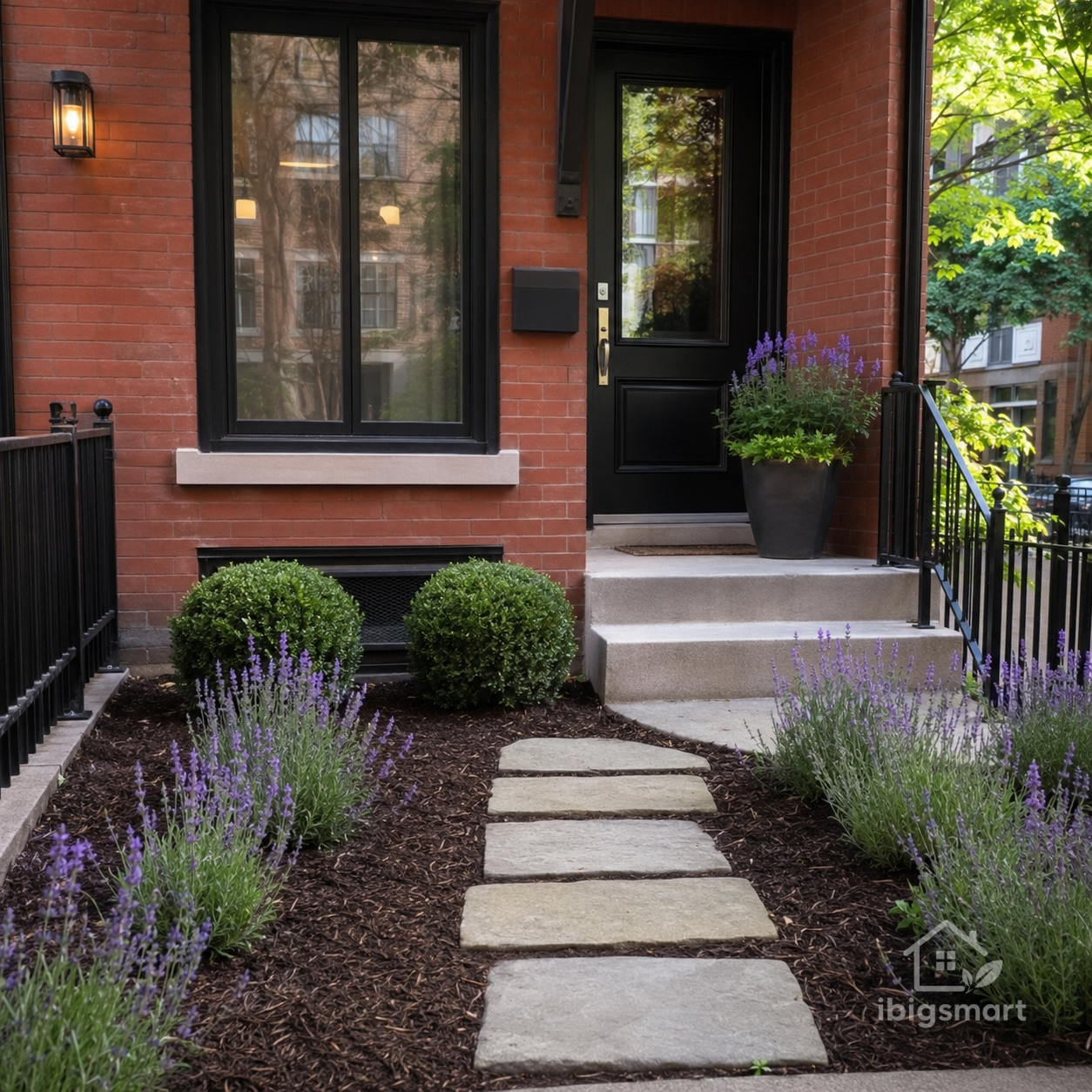
Visitors should be able to identify the route to the door immediately. Trim plants that narrow the path and repair unstable stepping stones.
If a secondary path is necessary, use consistently spaced pavers rather than scattered stones that are uncomfortable to walk across.
8. Add Lighting for Guidance
A small number of path lights can make steps and changes in direction easier to see. Space them deliberately rather than lining every inch of the walkway.
Solar lights are convenient where they receive enough direct daylight. Shaded locations may require another outdoor-rated solution.
9. Simplify Watering
New plants fail quickly when they receive shallow, inconsistent watering. A soaker hose or simple drip system can direct water into the planting bed while keeping the walkway dry.
Use a timer as a reminder, but adjust it for rainfall, season, soil, and plant needs.
10. Complete the Yard in Phases
A practical order is:
- Remove weeds and failing plants.
- Define the main bed.
- Improve the soil where necessary.
- Plant the structural tree and shrubs.
- Add repeated perennials or grasses.
- Apply mulch.
- Add containers and lighting last.
This prevents decorative purchases from consuming the budget before drainage, plant spacing, and irrigation are addressed.
A successful simple landscaping front yard project does not require filling every open area. Clear edges, repeated plants, an inviting entrance, and easier maintenance create a stronger result than a crowded collection of features.
✅ Last Updated on September 28, 2026 by BIG Smart Team