
A home coffee station sounds simple until the countertop becomes crowded with mugs, filters, coffee bags, syrups, and appliances. When everything competes for space, making one cup of coffee can leave the kitchen looking untidy.
The best coffee bar ideas are not only attractive. They keep everyday supplies within reach, make cleaning easier, and fit the way you actually prepare coffee. You do not need a large kitchen or an expensive renovation. A small cabinet, unused corner, sideboard, or rolling cart can become a practical coffee zone.
Before buying organizers or furniture, measure your appliance, available surface, shelf height, and distance to the nearest electrical outlet. Then choose a setup that solves the specific problem in your space.
1. Turn an Unused Counter Corner Into a Coffee Bar
An empty counter corner is often the easiest place to start. Keep the coffee maker near an outlet and place the items you use daily beside it. Less frequently used supplies can go in a cabinet or drawer.
A small tray helps contain loose items such as a scoop, sugar bowl, and stirrers. It also makes wiping the counter easier because everything can be moved at once.
Helpful product types:
- Compact countertop tray
- Airtight coffee canister
- Small utensil cup
- Cord organizer
2. Use a Freestanding Sideboard
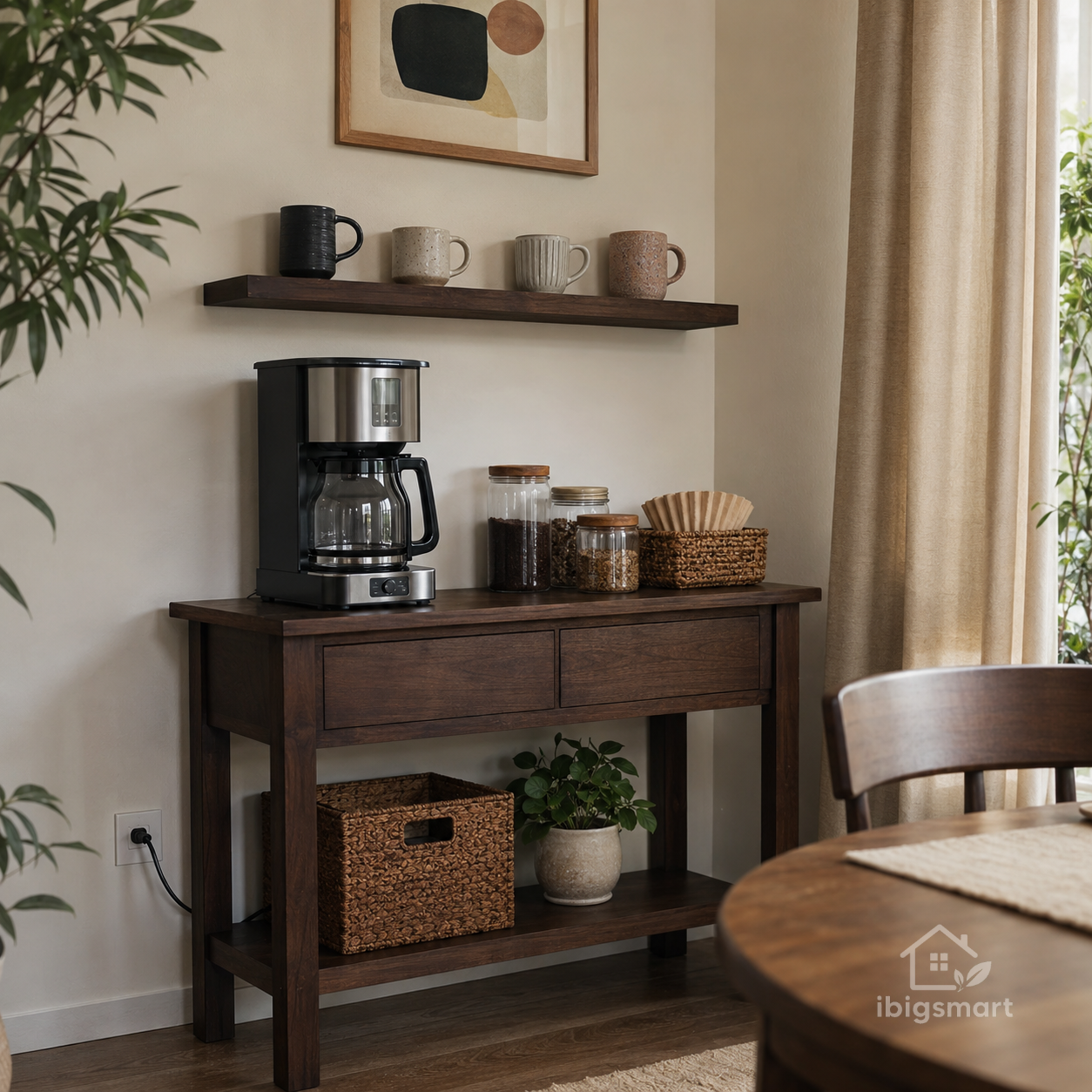
If the kitchen counter is already full, a sideboard or console table can create a separate beverage station in a dining room or breakfast nook.
Look for a piece with drawers or lower shelves. Drawers can hold filters, pods, tea bags, and measuring tools, while baskets underneath can store extra mugs and unopened supplies.
Check the furniture’s dimensions and weight capacity before placing an appliance on top. Position it near a suitable outlet so cords do not cross a walkway.
[Amazon Affiliate Link: Narrow Sideboard or Console Table]
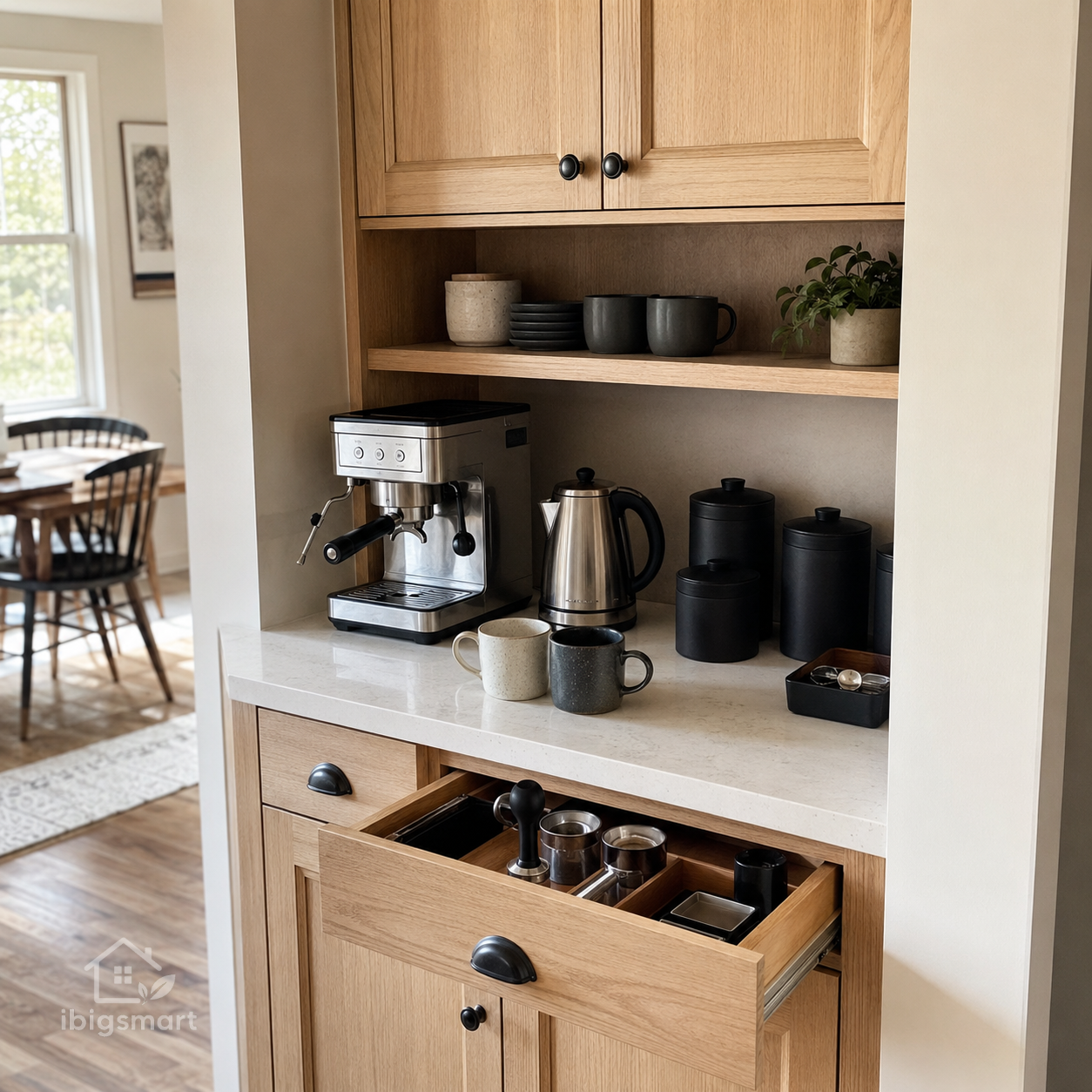
3. Build a Coffee Station Inside a Cabinet
A cabinet coffee bar keeps visual clutter out of sight. This works especially well in an open pantry, appliance garage, or tall kitchen cabinet.
Before using an enclosed cabinet, confirm that there is enough working space around the appliance. Follow the appliance manufacturer’s instructions for clearance, ventilation, heat, and steam. Doors should remain open while the machine is operating when required.
Inside the cabinet, use shelf risers, hooks, or pull-out organizers to make the full space easier to access.
4. Organize Supplies in a Dedicated Drawer
Small coffee supplies quickly make a countertop look messy. A drawer directly below the coffee maker is a convenient place for filters, pods, tea bags, scoops, and reusable accessories.
Adjustable dividers are useful because the layout can change when your supplies change. Group items according to your routine rather than organizing them only by appearance.
For example, keep filters beside the scoop and place the accessories used less often toward the back.
[Amazon Affiliate Link: Adjustable Bamboo Drawer Dividers]
5. Add One or Two Floating Shelves
Floating shelves can provide storage when counter space is limited. Use them for mugs, sealed containers, or lightweight decorative items.
Avoid placing heavy appliances or frequently handled objects on shelves that are difficult to reach. The shelf and its mounting hardware must be appropriate for the wall and expected load.
A practical arrangement might include everyday mugs on the lowest shelf and spare supplies higher up.
6. Create a Small Coffee Bar on a Rolling Cart
A slim rolling cart is useful in a rental, apartment, or kitchen without a permanent coffee area. It can hold a pour-over setup, kettle, mugs, and dry supplies without changing existing cabinetry.
Choose a cart with locking casters and a stable top. Heavier items should remain on the lower shelves to reduce the chance of tipping. Position the cart before using electrical appliances and keep the cord safely away from the wheels.
7. Use Vertical Storage for Mugs
A collection of mugs can consume an entire cabinet shelf. A mug tree, under-shelf rack, or securely installed wall hooks can move them into otherwise unused vertical space.
Keep only regularly used mugs at the coffee bar. Store seasonal or sentimental pieces elsewhere so the station remains functional.
When using hooks, allow enough room between mugs to prevent them from knocking together.
8. Store Coffee in Airtight Containers
Open coffee bags can spill, take up space, and make it difficult to see how much coffee remains. A properly closed container creates a cleaner station and keeps the original package from falling over.
Select a container that fits the quantity you normally buy rather than choosing the largest option. If the coffee package contains important preparation, allergen, or expiration information, keep that information with the stored coffee.
9. Add a Tiered Organizer for Small Items
Syrups, sweeteners, tea bags, and accessories can disappear behind larger appliances. A compact tiered organizer makes small items easier to see without spreading them across the counter.
Use it only for supplies you reach for regularly. Too many bottles and containers can make even a tiered stand feel crowded.
Measure the space beneath any wall cabinet before selecting an organizer.
10. Include a Simple Cleanup Zone
Many coffee stations become messy because there is nowhere to place used spoons, drips, or empty filters. A washable mat or small absorbent cloth beside the machine makes daily cleanup easier.
Keep a small waste container nearby if you use disposable filters or pods. Reusable tools should have a designated place where they can drain and dry properly.
11. Choose a Style That Matches the Room
A coffee bar feels more intentional when its materials and colors connect with the surrounding space. Warm wood and handmade ceramics suit a relaxed rustic room, while black cabinetry and simple stoneware can complement a modern kitchen.
You do not need to replace every item. Repeating one existing color or material is often enough to make the setup feel coordinated.
Function should still come first. A beautiful station will not remain attractive if mugs are difficult to reach or supplies have nowhere to go.
What to Measure Before Buying Anything
Record these measurements before choosing furniture or organizers:
- Width, depth, and height of the available area
- Full dimensions of the coffee maker or kettle
- Clearance needed to fill tanks or open lids
- Space between the counter and upper cabinets
- Distance to a suitable electrical outlet
- Interior dimensions of drawers and shelves
Compare these measurements with the current product information on Amazon before ordering. Product dimensions and included components can vary between listings and models.
A Simple Coffee Bar Shopping Plan
Start with the problem that causes the most frustration.
If the counter is crowded, consider a sideboard, cabinet station, or rolling cart. If small supplies are difficult to find, begin with drawer dividers or a tiered organizer. If mugs take up too much room, use safe vertical storage.
A useful coffee bar does not require many products. A stable surface, sensible storage, and a layout that follows your morning routine will usually make the biggest difference.
Final Thoughts
The most successful coffee bar ideas make preparing coffee easier without creating another area that is difficult to maintain. Give everyday items the most accessible positions, move backup supplies out of sight, and leave enough open space for preparing and cleaning up.
Start with the furniture and appliances you already own. After using the station for several days, it will become clearer which organizer or storage product would genuinely improve it.
✅ Last Updated on September 28, 2026 by BIG Smart Team