
A beautiful garden does not need to be large, expensive, or filled with elaborate features. The most successful outdoor spaces usually feel good because the plants, paths, seating, and decorative elements work together rather than competing for attention.
Good garden ideas also go beyond appearance. A garden should give you a reason to use it—whether that means having coffee outside, growing herbs, watching birds, entertaining friends, or simply creating a calmer view from the house.
Instead of trying to decorate every empty corner, start by deciding how you want the space to function. Once the layout works, plants and decorative details become much easier to choose.
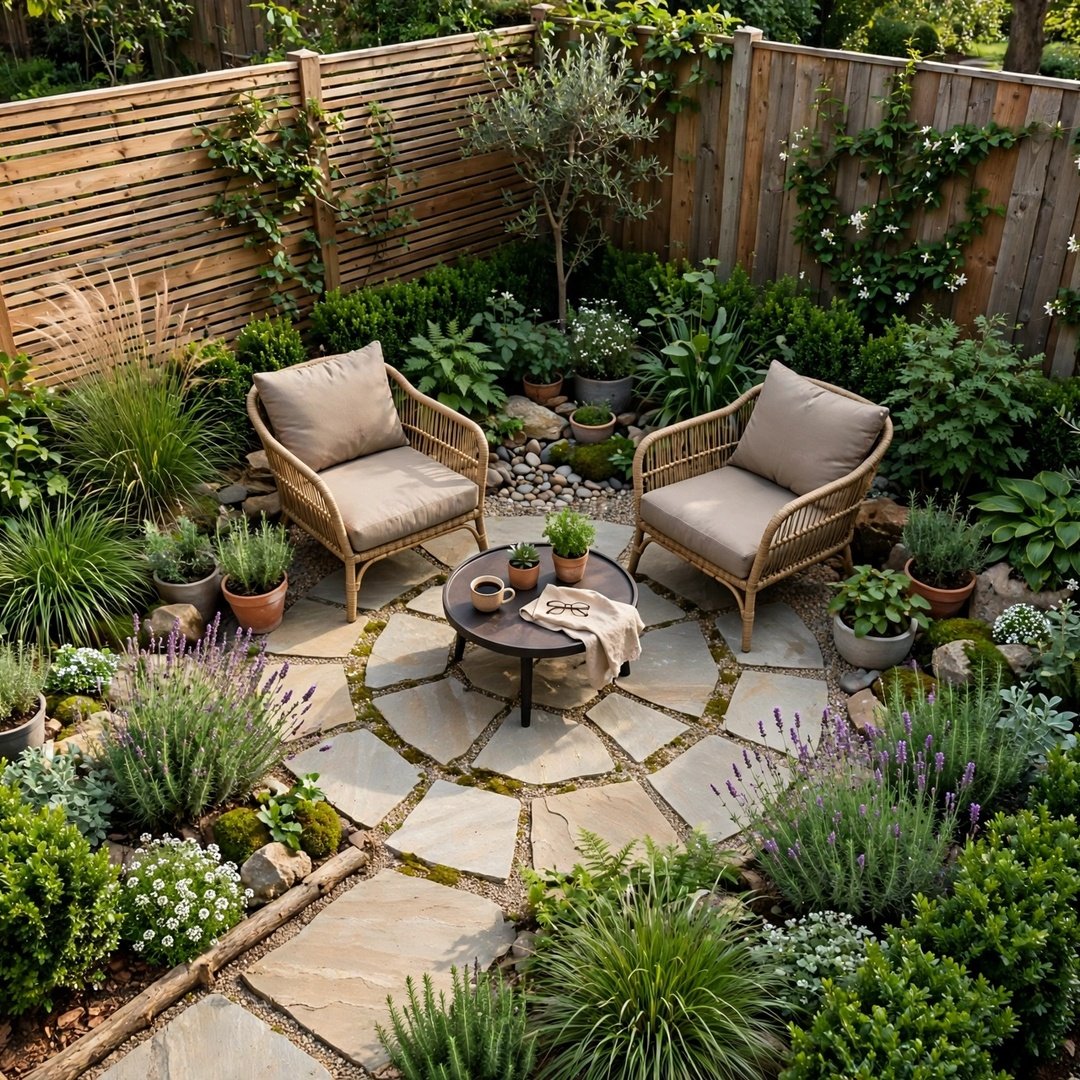
What Makes a Garden Look Beautiful?
A garden usually looks most cohesive when it has a clear structure, repeated elements, and enough variation to keep the space interesting.
You do not need dozens of plant varieties. In fact, repeating a smaller selection of plants, colors, and materials often creates a more intentional result.
Five elements make the biggest difference:
- Clear pathways that show where people should move
- Defined planting areas instead of plants scattered randomly
- Variation in height from groundcovers to shrubs and taller plants
- Repeated colors or materials that connect different parts of the garden
- A focal point such as a tree, bench, planter, water feature, or seating area
The goal is not perfect symmetry. It is visual consistency.
For example, three large planters using similar materials can create more impact than eight unrelated pots placed around a patio.
Work From Large Elements to Small Details
One common mistake is buying decorative accessories before planning the garden itself.
A better order is:
Layout → paths → major plants → seating → lighting → decoration
This keeps decorative objects from becoming the main structure of the garden.
Start With a Garden Layout That Fits How You Live
A good garden layout begins with function rather than style.
Before choosing plants, ask what you actually want to do outside.
Perhaps you need:
- a place to sit
- an area for children
- vegetable or herb beds
- privacy from neighbors
- room for entertaining
- a shady reading corner
- open lawn
- pollinator planting
- space for a pet
Trying to make every garden perform every function usually creates clutter.
Instead, choose two or three priorities and build the layout around them.
Simple Garden Layout Ideas
Different garden sizes benefit from different approaches.
| Garden type | Layout approach | Why it works |
|---|---|---|
| Small garden | One main seating zone with planting around the perimeter | Keeps the center usable |
| Narrow garden | Divide the space into two or three sections | Makes the garden feel less like a corridor |
| Large yard | Create separate destinations connected by paths | Prevents the space from feeling empty |
| Patio garden | Use containers and vertical planting | Adds greenery without permanent beds |
| Family garden | Keep open space near the house and planting toward edges | Improves visibility and flexibility |
| Low-maintenance garden | Use larger planting groups and fewer material changes | Reduces visual clutter and upkeep |
A small garden often benefits from fewer, larger features rather than many miniature ones.
A single well-proportioned seating area surrounded by planting can make a small yard feel more complete than several tiny activity zones squeezed together.
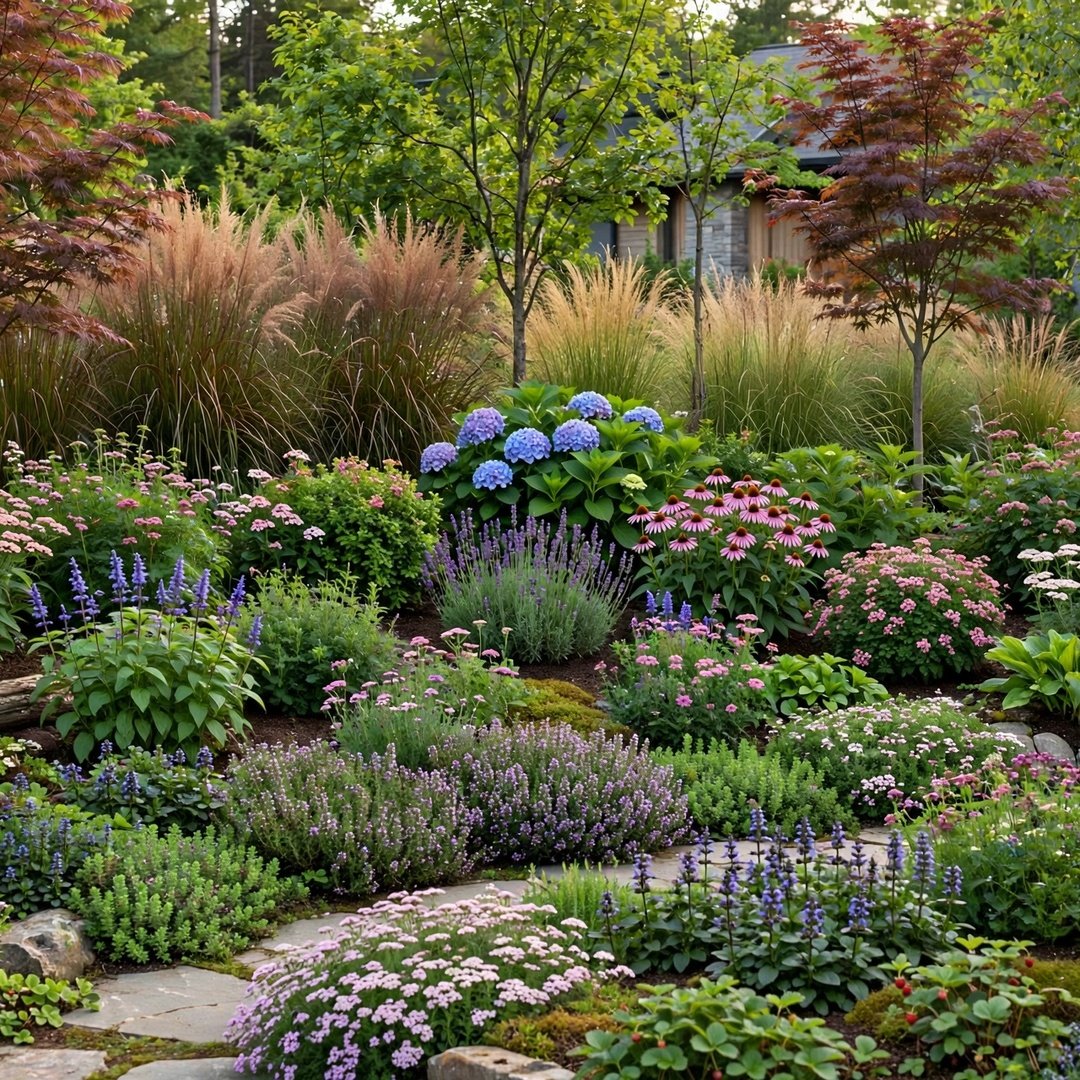
Use Layers to Make Planting Feel More Natural
Planting at only one height can make a garden feel flat.
Instead, think in layers.
A simple planting structure might include:
Tall layer
Small trees, tall shrubs, ornamental grasses, climbing plants
Middle layer
Medium shrubs, flowering perennials, herbs
Lower layer
Low perennials, groundcovers, seasonal flowers
This creates depth and makes even relatively simple planting schemes look more established.
It also gives you more opportunities to combine plants for different seasons instead of depending on one short burst of flowers.
Repeat Instead of Constantly Adding Something New
Repetition is one of the easiest ways to make a garden look intentionally designed.
If you use one ornamental grass near the patio, repeat it elsewhere.
If lavender or another flowering perennial works well in one border, allow it to appear again farther along the path.
The garden will still have variety, but the repeated plants create visual connections.
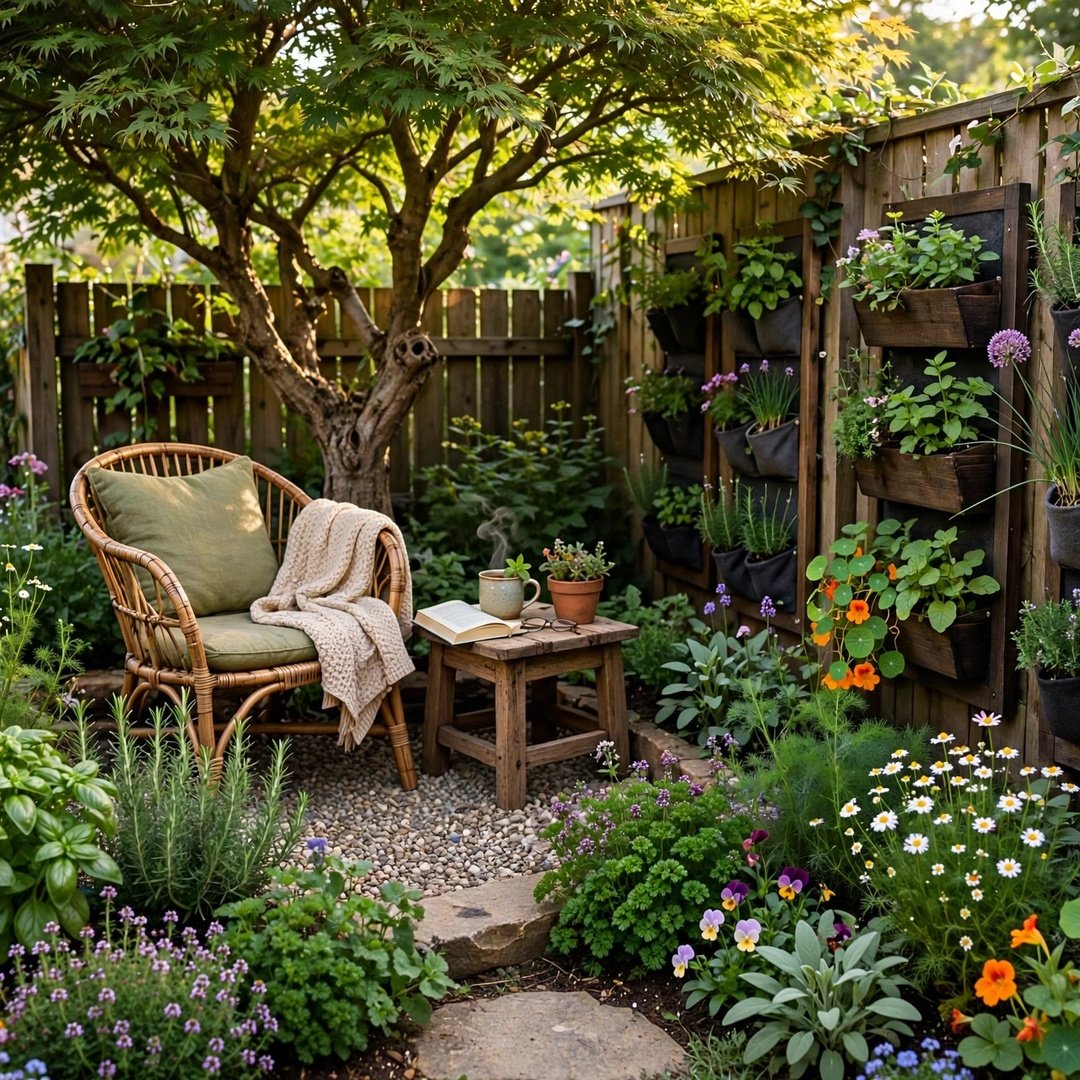
Beautiful Outdoor Garden Decor That Does More Than Decorate
The most useful garden decor usually has both a visual and practical role.
Instead of filling the garden with small ornaments, consider larger pieces that contribute to the space.
Good options include:
Large Planters
Large pots can frame entrances, mark seating areas, or introduce plants where there is no soil.
Using two or three substantial containers generally looks more intentional than covering a patio with many small mismatched pots.
Benches and Outdoor Seating
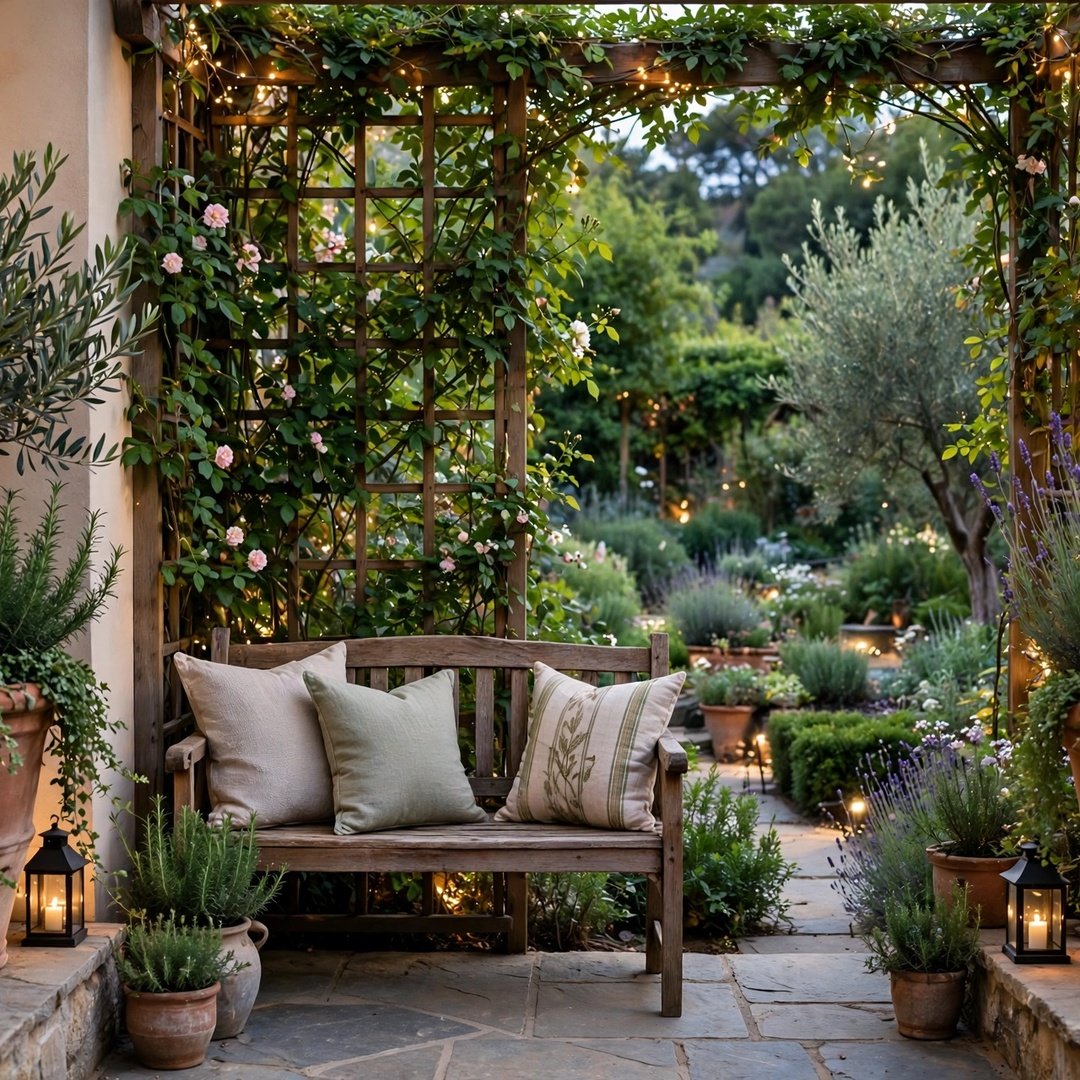
A bench can become a focal point while also creating a destination within the garden.
Position it where there is something worth looking at rather than simply placing it against the nearest wall.
Trellises and Arbors
Vertical structures introduce height and can support climbing plants while providing privacy or defining transitions between garden areas.
Outdoor Lighting
Lighting can make a garden usable after sunset, but more light is not necessarily better.
Low-level path lights, subtle lighting near steps, or a few fixtures highlighting important plants generally create a calmer effect than illuminating the entire garden equally.
Water Features
A simple fountain or small basin can add movement and sound without becoming the dominant feature.
Scale matters. A small courtyard does not need a large waterfall to create interest.
Garden Art
Sculpture, ceramics, metalwork, or handmade pieces can give a garden personality.
Treat these objects as focal points rather than filling every available gap.
Garden Ideas That Feel More Personal
A unique garden is not necessarily one built around unusual products. It is often a garden that responds specifically to the people who use it.
Here are several ways to create more individual character.
Create a Destination Away From the House
If space allows, place a chair, bench, or small table farther into the garden rather than keeping all seating directly beside the house.
A destination gives people a reason to move through the garden and changes the way the entire space is experienced.
Mix Edible and Ornamental Plants
Herbs, fruit, vegetables, and flowering plants do not always need separate gardens.
Rosemary, thyme, strawberries, edible flowers, fruiting shrubs, and vegetables can become part of an ornamental planting scheme when their growing requirements are compatible.
Use Vertical Space
Walls, fences, pergolas, and trellises can support climbing plants or containers.
This is especially useful in smaller gardens where ground space is limited.
Build a Small Wildlife Area
A corner with diverse planting, water, shelter, and flowers for pollinators can add life to the garden without requiring the entire yard to become wild.
The Royal Horticultural Society is emphasizing biodiversity and wildlife-supporting gardens in 2026, along with planting diversity that can help gardens cope with changing conditions. RHS
Turn an Unused Corner Into a Micro-Garden
A space too small for a full seating area can still become useful.
Try:
- a group of shade plants
- herbs near the kitchen
- a pollinator patch
- a small water basin
- a reading chair
- a collection of containers
Think of it as one intentional scene rather than leftover space that needs filling.
What Can Make a Garden Look Cheap or Unfinished?
Cost is not usually the problem.
An inexpensive garden can look considered, while an expensive garden can still feel disorganized.
What tends to weaken a garden visually is lack of consistency.
Common examples include:
Too Many Small Decorations
Numerous signs, figurines, tiny lanterns, pots, and ornaments compete for attention.
Choose fewer pieces and allow some empty space around them.
Too Many Materials
Mixing several paving styles, multiple fence finishes, brightly colored pots, different edging materials, and unrelated furniture can make the garden feel fragmented.
Limit the number of dominant materials.
Plants With No Visual Relationship
Buying individual plants because each looks attractive at the garden center can lead to a collection rather than a composition.
Choose a limited palette and repeat plants.
Everything Lined Around the Perimeter
A lawn surrounded by a thin strip of plants often lacks depth.
Where space permits, make some planting beds wider and vary their shape.
Features That Are Out of Scale
A tiny planter beside a very large wall may disappear visually, while oversized furniture can overwhelm a compact patio.
Matching scale to the space is often more important than the price of the object.
A Simple Rule for Making a Garden Look More Finished
When a garden feels unfinished, do not immediately add more decoration.
Check these four things first:
1. Function
Is there a clear reason to use the space?
2. Structure
Are paths, beds, seating areas, and larger plants clearly organized?
3. Planting
Are plants repeated and layered rather than randomly scattered?
4. Details
Do pots, lighting, furniture, and decoration reinforce the overall design?
Think of this as:
Function → Structure → Planting → Details
If the first three layers are weak, adding more decorative objects rarely solves the problem.
This framework is useful because it also helps prioritize a limited budget. Spend first on the parts that shape how the garden functions and feels; accessories can be added gradually later.
What Garden Design Trends Are Emerging in 2026?
Several current garden and outdoor-design trends point toward usable, resilient, and more personal outdoor spaces, rather than gardens created primarily for appearance.
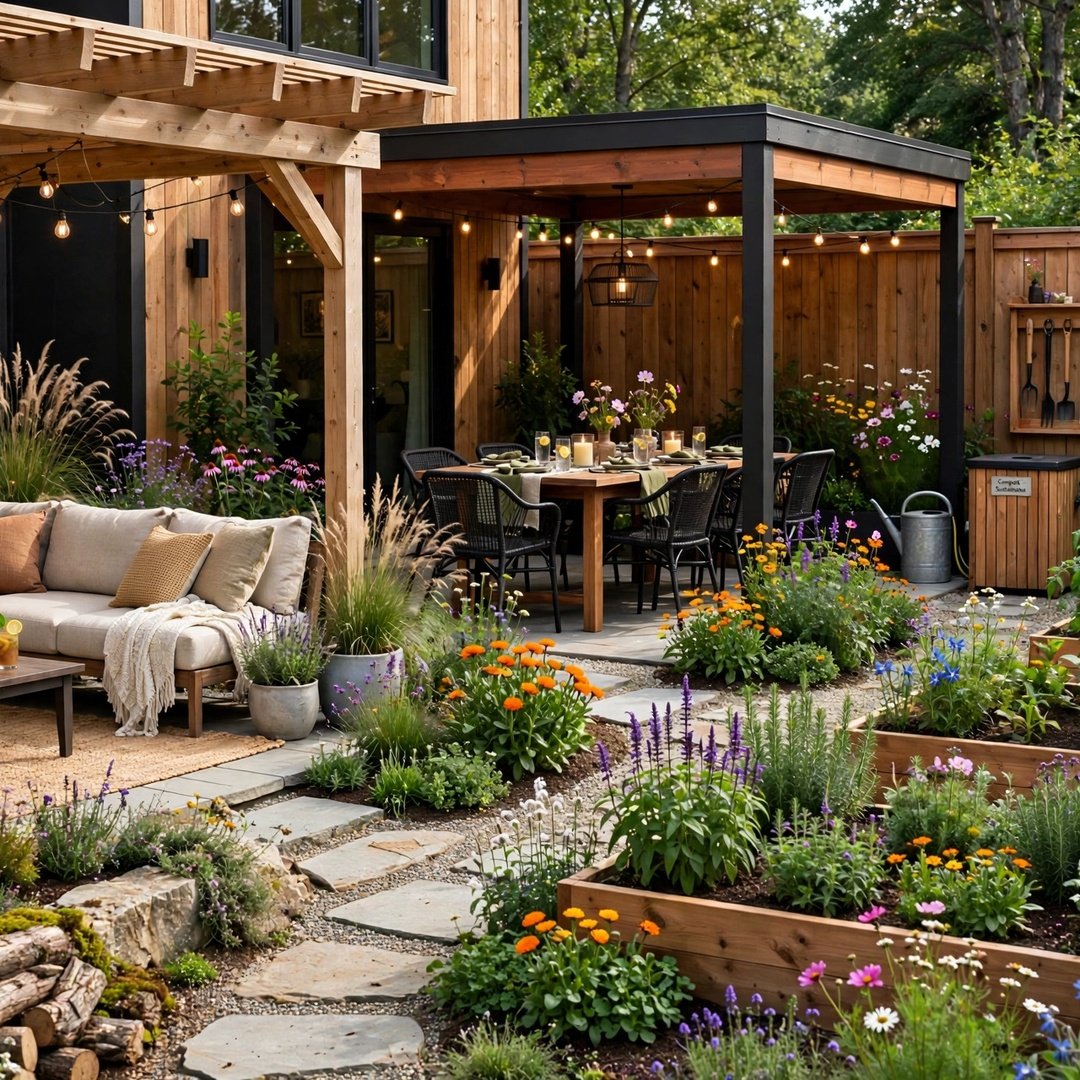
One major direction is the continued blending of gardens with everyday outdoor living. In Houzz’s 2026 U.S. study of 1,191 homeowners undertaking or planning outdoor projects, 83% of renovated outdoor spaces included a lounge or seating area. The research also found distinct zones for dining, quiet retreats, gardening and outdoor cooking. Houzz
Other themes emerging in 2026 include:
Purposeful Planting
Gardens are increasingly being considered in terms of pollinators, biodiversity, water management, and resilience rather than appearance alone. Both the RHS and Garden Media Group highlight purposeful, ecologically useful planting in their 2026 outlooks. Garden Media Group
Outdoor Rooms and Defined Zones
Instead of treating a backyard as one open area, homeowners are creating specific places for lounging, dining, gardening, cooking, and relaxing. Houzz
More Naturalistic Planting
At the 2026 Chelsea Flower Show, Houzz noted a move toward relaxed, naturalistic planting adapted for usable residential gardens rather than purely wild-looking landscapes. Houzz
Gardens With Personal Character
Garden Media Group’s 2026 report also points toward collecting plants, decor, and objects that tell a personal story rather than following one uniform style. Garden Media Group
Trends can provide inspiration, but they should not dictate every decision. A garden built around your climate, available space, maintenance tolerance, and daily habits will usually age better than one designed entirely around a short-lived aesthetic.
How to Choose the Right Garden Ideas for Your Space
Before copying an attractive garden you have seen online, run it through a simple checklist.
Ask:
How much sun does this area receive?
Plants and seating areas both behave differently in full sun and shade.
How much maintenance am I realistically willing to do?
A garden that requires weekly pruning, watering, and deadheading may not suit someone who wants a low-maintenance yard.
What do I actually want to do here?
Design around real activities rather than imaginary ones.
What already works?
Established trees, views, existing patios, fences, and mature shrubs can become assets rather than things that automatically need replacing.
What is the main visual problem?
Lack of privacy, empty walls, an undefined patio, too much lawn, or scattered planting each require different solutions.
This prevents a common problem: collecting many attractive garden ideas that do not solve the actual needs of the space.
A Better Garden Does Not Require More Things
Some of the most effective garden improvements involve editing rather than adding.
Widening one planting bed, grouping several pots together, repeating a successful plant, moving a bench to a better location, or defining a path can transform how a garden feels without rebuilding the entire yard.
Start with the structure. Give the garden a few clear purposes. Use plants repeatedly and at different heights. Add decoration only where it strengthens the design.
The result does not have to look elaborate.
It should simply feel as though every part of the garden belongs there—and make the outdoor space somewhere you genuinely want to spend time.
✅ Last Updated on September 28, 2026 by BIG Smart Team