
A backyard can look green and still feel difficult to use. There may be nowhere comfortable to sit, garden tools scattered around the patio, plants struggling in the wrong locations, or a lawn that requires more maintenance than enjoyment.
The most effective Backyard Garden Designs do not begin with buying more plants. They begin by identifying how the yard needs to work and then choosing a few practical items that solve specific problems.
1. Divide the Backyard Into Useful Zones
Trying to make every part of the yard serve every purpose often results in a space that feels disorganized. Instead, divide it into three simple zones:
- A seating or dining area near the house
- An open area for movement, children, or pets
- A planting area along fences or property boundaries
A gravel path, outdoor rug, planter boxes, or low garden edging can separate these areas without building permanent walls.
2. Create a Path Before Adding More Plants
Without a defined walkway, people step on the lawn and soil, especially after rain. This can leave muddy patches and compact the ground around plants.
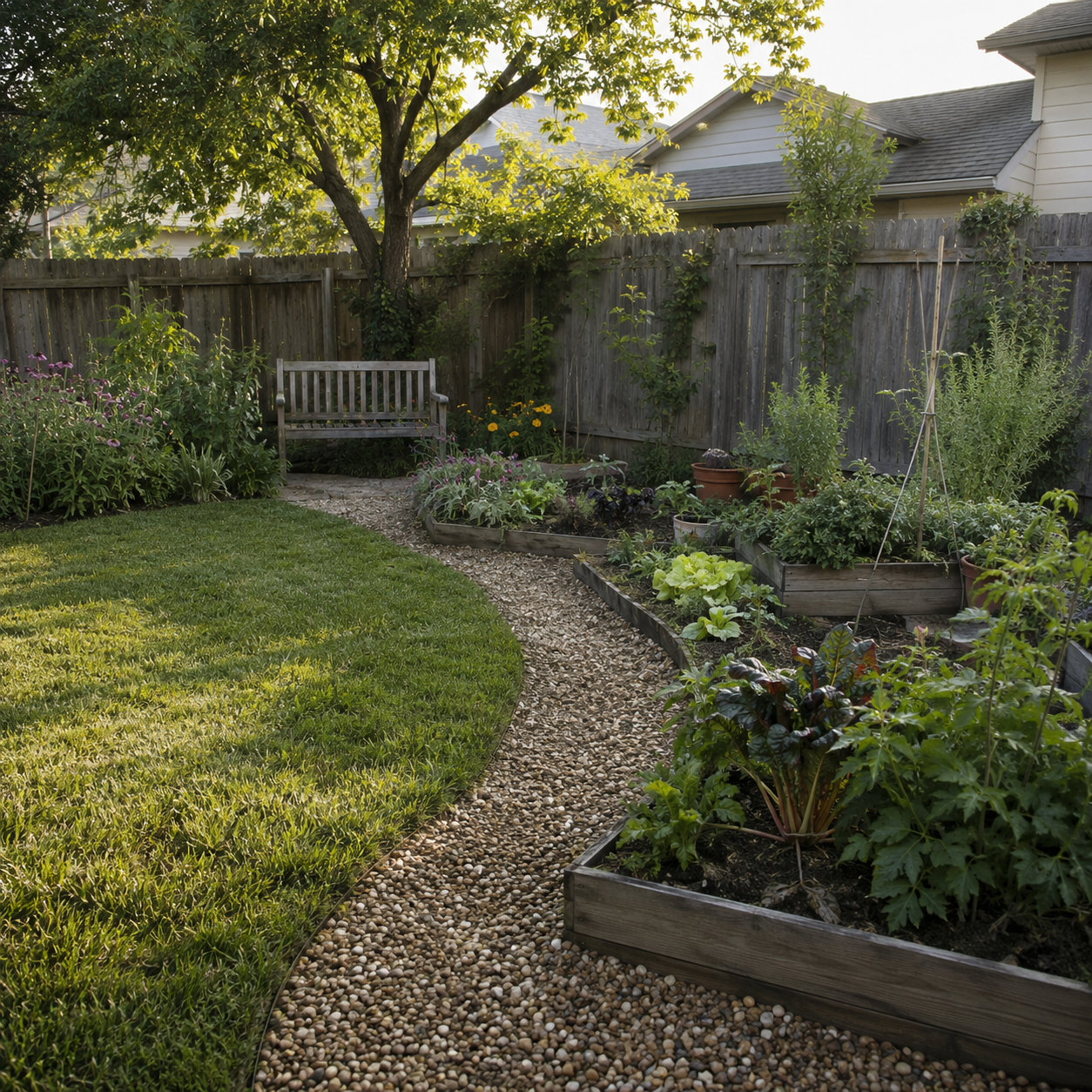
Stepping stones are useful for short paths, while pea gravel works well for curved or frequently used walkways. Landscape fabric beneath loose gravel may help reduce weeds, although it should not be placed where you plan to grow spreading plants.
3. Use Raised Beds to Control Untidy Planting Areas
Vegetables and herbs can quickly make a small backyard look crowded when they are planted in scattered containers. Raised beds create a clear growing area while making soil improvement and weed control easier.
Place them where they receive adequate sunlight and leave enough room between beds for a watering can or garden cart. A narrow bed positioned against a fence may be more practical than a large bed in the middle of the yard.
4. Make Empty Fences Work Harder
A bare fence takes up valuable vertical space. Trellises can support flowering vines, climbing vegetables, or lightweight hanging planters without reducing the usable lawn area.
Before choosing a climbing plant, check its mature size and how strongly it attaches itself. Vigorous vines may require a freestanding trellis positioned slightly away from the fence.
5. Build a Comfortable Seating Corner
Many backyards have chairs but still do not feel comfortable. The problem is often location rather than furniture.
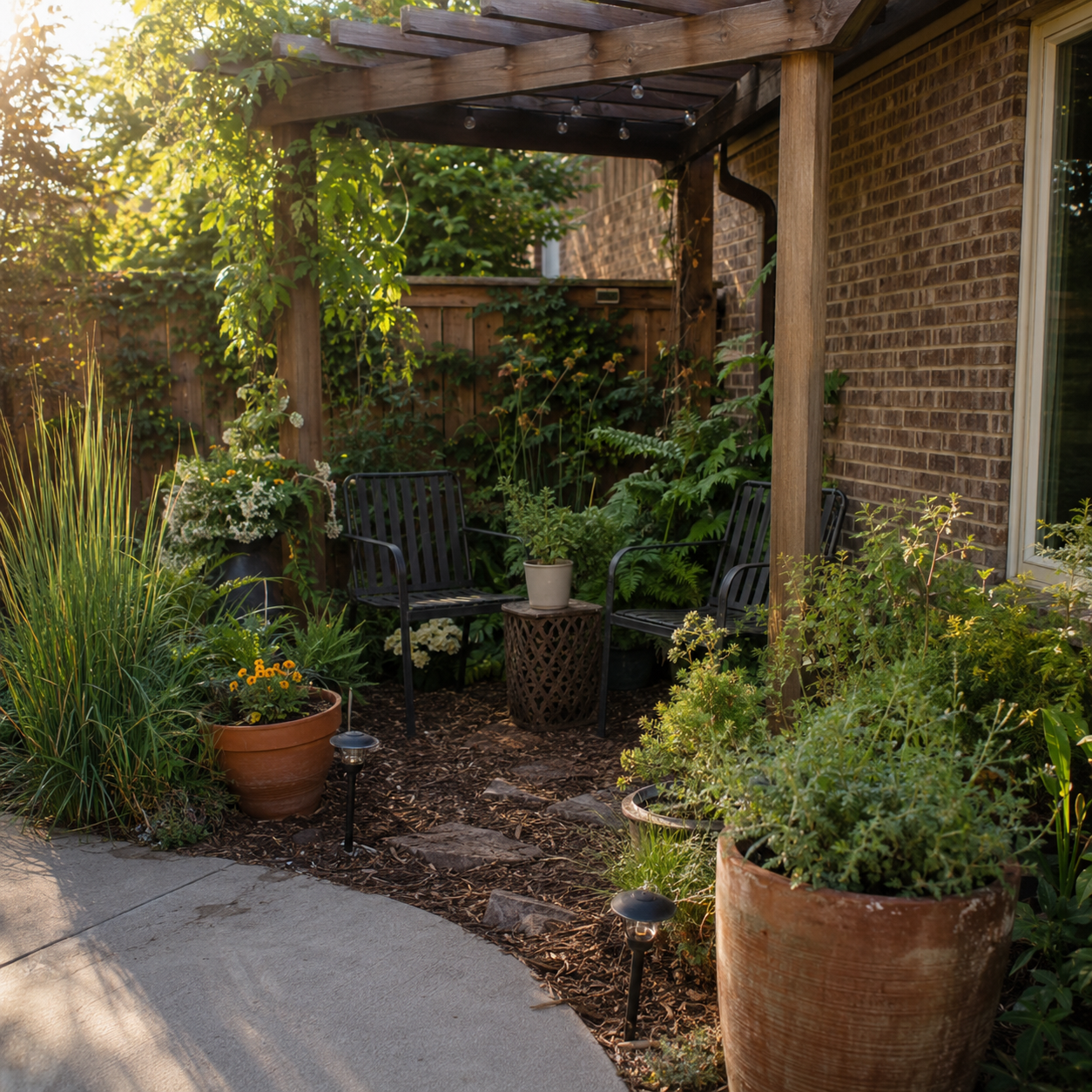
Choose a spot with afternoon shade, protection from strong wind, and a pleasant view back toward the garden. A small bench or two compact chairs may work better than a large outdoor sofa that overwhelms the space.
A side table provides somewhere to place a drink, book, or small lantern without using much room.
6. Choose Plants According to the Conditions
Buying plants based only on appearance can lead to repeated replacements. Observe the yard before shopping:
- Note which areas receive full sun.
- Identify places where water collects after rain.
- Check whether the soil dries quickly or remains damp.
- Look for areas exposed to strong wind.
- Consider the plant’s mature width, not only its current size.
Group plants with similar water and light requirements together. This makes watering simpler and reduces the risk of one plant receiving too much while another receives too little.
A basic soil moisture meter can help when it is difficult to judge conditions below the surface.
7. Reduce Lawn Without Creating More Work
A large lawn is not always the easiest option. Narrow strips and awkward corners can be difficult to mow, while grass beneath mature trees often remains thin.
Replace problem areas with planting beds, mulch, gravel, or shade-tolerant ground cover. Avoid removing all the lawn unless the replacement materials suit the climate and how the yard is used.
Use edging between lawn and planting areas to prevent grass from spreading into the beds.
8. Add Lighting Where It Solves a Real Problem
Outdoor lighting should help people move safely rather than cover the entire garden in bright light.
Place low path lights beside steps, changes in level, and the route between the house and seating area. Warm lights around a pergola can make a dining corner usable after sunset, but a small number of evenly spaced lights usually looks better than excessive illumination.
9. Plan Storage Into the Design
Tools, hoses, cushions, and bags of soil can quickly undo an otherwise attractive design. A narrow deck box or vertical storage cabinet can keep frequently used supplies close without requiring a full garden shed.
Use a wall-mounted hose holder to prevent the hose from covering paths or damaging plants.
A Simple Plan Before You Buy Anything
Measure the backyard and sketch its basic shape. Mark doors, windows, fences, existing trees, sunny areas, and wet areas. Then decide where the path, seating, storage, and planting zones should go.
Choose products only after confirming their dimensions. This prevents a raised bed, bench, or storage box from taking up more room than expected.
Good Backyard Garden Designs are not defined by how many features they include. They work because every path, plant, seat, and storage solution has a clear purpose.
✅ Last Updated on September 28, 2026 by BIG Smart Team