
A small pool yard can feel organized when it is empty and crowded as soon as two loungers, a float, towels, toys, and a cleaning pole appear. The gate swing becomes a storage corner, wet gear lands on the walking route, and a deck box that seemed compact prevents access to the pump. Adding more containers often divides the same limited space into smaller obstacles.
Practical inground pool ideas for a compact backyard begin by protecting circulation before choosing storage. The aim is to give furniture, wet gear, maintenance tools, and seasonal items specific homes while keeping the barrier, rescue equipment, supervision views, cover system, and service route fully functional.
1. Map Every Fixed Safety and Service Zone
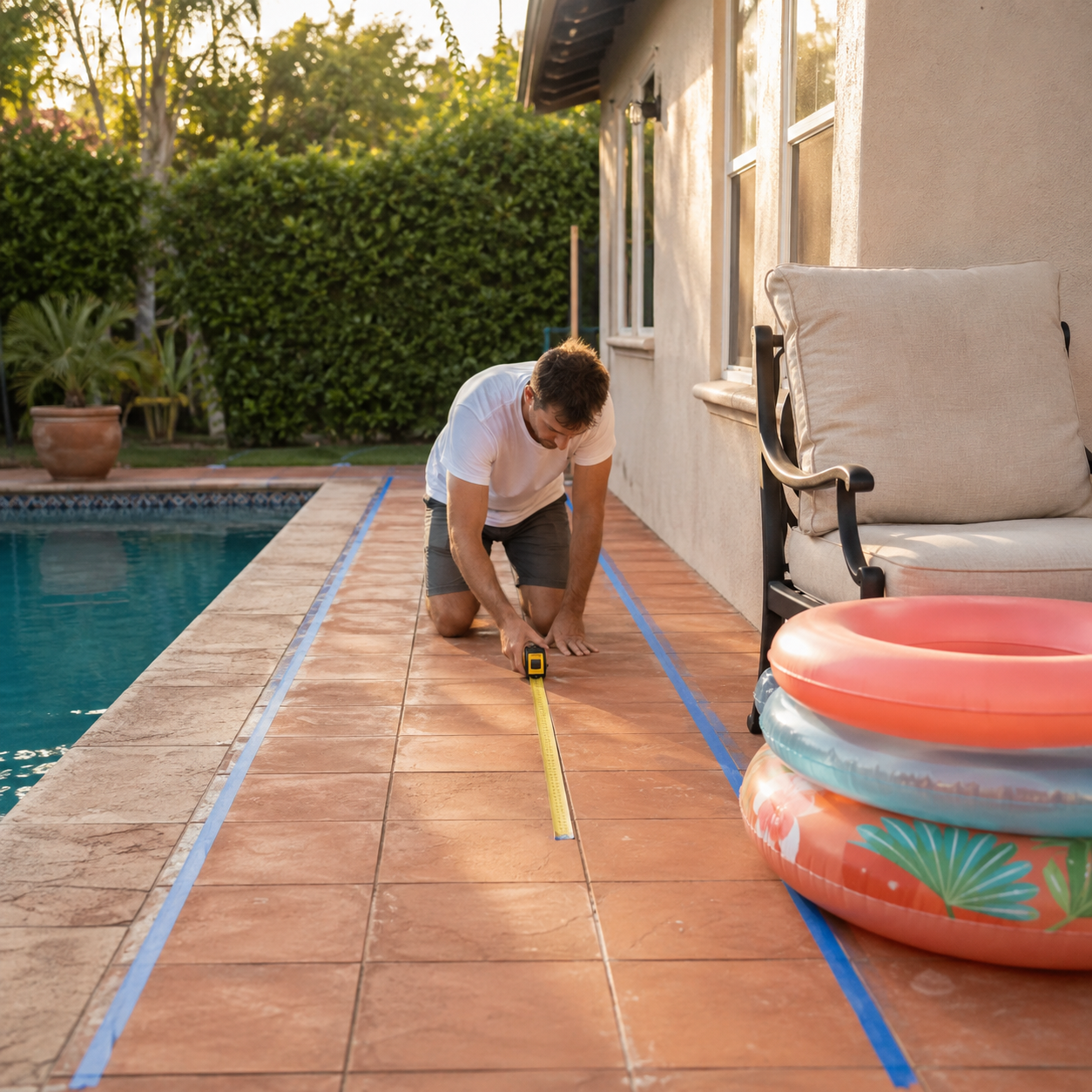
Draw the house, pool edge, fence, gates, doors, steps, drains, equipment, cover mechanism, electrical items, and rescue equipment. Measure the narrowest point on each walking route and note which components must open, slide, lift, or be removed for maintenance.
Use removable tape to outline zones on a dry deck, then walk the route while carrying the largest routine item. Homeowner measurements help reveal conflicts, but local requirements, manufacturer instructions, and qualified professionals should determine required clearances.
2. Protect the Barrier Before Adding Storage
Test every gate and door through its complete closing and latching cycle. Keep furniture, boxes, planters, toys, ladders, and wheeled items away from the swing, latch approach, and fence. An object that blocks a gate or provides a foothold is not solving a storage problem.
The U.S. Consumer Product Safety Commission recommends layers of protection, including pool barriers and self-closing, self-latching gates. Ask the appropriate local authority or pool professional how the installed barrier should function, and never prop it open for convenience. CPSC residential pool-barrier guidance
3. Establish One Continuous Walking Lane
Choose the route that connects the house, gate, pool entry, seating, and emergency access with the fewest turns. Mark it temporarily and remove every loose object from that lane. The route should remain visible when chairs are occupied and when doors or storage lids are open.
Avoid placing rugs, cords, hoses, or small tables across circulation. If the deck is uneven, slippery, settled, or too narrow for safe use, address the surface or layout professionally instead of using a painted line as the permanent solution.
4. Right-Size Furniture for the Occupied Position
Measure each chair when someone is seated, not only when it is pushed under a table. Include reclining depth, pulled-out dining chairs, umbrella bases, and the space needed to stand. In a compact yard, two comfortable seats with clear circulation may work better than a full matching set.
Choose stable outdoor furniture suited to the surface and local weather. Folding or stacking pieces are useful only if there is a defined place to secure or store them. Do not lean folded furniture against the pool fence or place it where wind can move it into the route.
5. Give Wet Gear a Ventilated Landing Place
Create a small towel-and-swimwear station on the house side of the deck, outside the barrier’s climbable area and away from electrical equipment. Use open hooks, mesh bags, or ventilated baskets so wet items can drain and dry rather than disappearing into a sealed box.
Keep hooks smooth and at a practical height, and empty standing water promptly. A wet-gear station should not narrow the route, hide a door alarm, or encourage swimmers to cross the deck repeatedly while dripping.
6. Store Long Maintenance Tools Off the Deck
Telescoping poles, brushes, nets, hoses, and vacuums need a secure location where they cannot roll, project into circulation, or become play equipment. A small utility shed or suitable wall rack outside the barrier may work when it remains accessible to the person maintaining the pool.
Support long tools at more than one point and follow the rack’s installation instructions. Do not drill into fencing, pool equipment, or building surfaces without confirming suitability. Keep rescue equipment separate, visible, and immediately accessible rather than mixing it with cleaning tools.
7. Keep Pool Chemicals in Their Own Approved System
Do not treat an ordinary deck box as universal storage. Pool chemicals need a dedicated location and conditions specified on each label and by applicable building and fire rules. CDC guidance says to protect chemicals from heat, direct sunlight, humidity, and water, and to keep individual products from mixing with incompatible substances. CDC pool chemical safety
Keep products in original labeled containers, secured away from children and unauthorized users. Ask a qualified pool professional where and how the specific products should be stored. Towels, toys, metal tools, fuel, and garden products do not belong in the same chemical-storage space.
[Affiliate Link: chemical-resistant safety goggles specified by the label]
[Affiliate Link: chemical-resistant gloves specified by the label]
8. Preserve the Complete Equipment Route
Draw the path from the gate to the pump, filter, heater, valves, controls, and cover mechanism. Include the width of a technician’s cart and the room required to open or remove components. Storage beside equipment can obstruct airflow, drainage, shutoffs, or working space even when the deck still looks tidy.
Use the installed product manuals and qualified service guidance rather than one generic clearance. Keep planters, shelves, hoses, and bins outside the identified zone, and do not use warm equipment surfaces to dry towels.
9. Plan Where the Pool Cover Goes During Use
A cover may require a reel, track, folded-storage location, drainage method, or unobstructed operating zone. Select the cover system for the exact pool and household safety plan, then keep furniture and storage outside its movement path.
EPA WaterSense reports that consistent cover use can substantially reduce evaporation while also reducing some cleaning needs. A solar blanket or ordinary debris cover should not be treated as a safety cover unless it is designed, installed, and maintained for that purpose. EPA pool water-efficiency guidance
[Affiliate Link: fitted pool cover system]
[Affiliate Link: cover reel compatible with the selected cover]
10. Add Light and Run a Weekly Reset
Use suitable shielded outdoor lighting to make changes in level, the gate approach, and the main walking lane easier to see without shining glare across the water. Electrical design and installation around pools require applicable products, local rules, and qualified help.
Once a week—and after parties or storms—return furniture to its zone, hang wet gear, secure long tools, remove broken toys, and test the gate. Check drains, rescue equipment, cover hardware, and the equipment route. The reset should take minutes because every item already has an assigned place.
Compact Pool Yard Checklist
- Measure gates, doors, equipment, drains, cover hardware, and narrow routes.
- Keep all storage and furniture outside the pool barrier’s working area.
- Preserve one continuous lane between the house, gate, and pool.
- Test furniture in its fully occupied and reclined positions.
- Dry towels and swimwear at a ventilated station outside circulation.
- Secure long maintenance tools away from the deck and rescue equipment.
- Store chemicals separately according to labels and applicable rules.
- Protect the complete technician route and equipment working space.
- Reserve space for the selected cover’s operation and storage.
- Recheck the gate, deck, equipment route, and storage zones weekly.
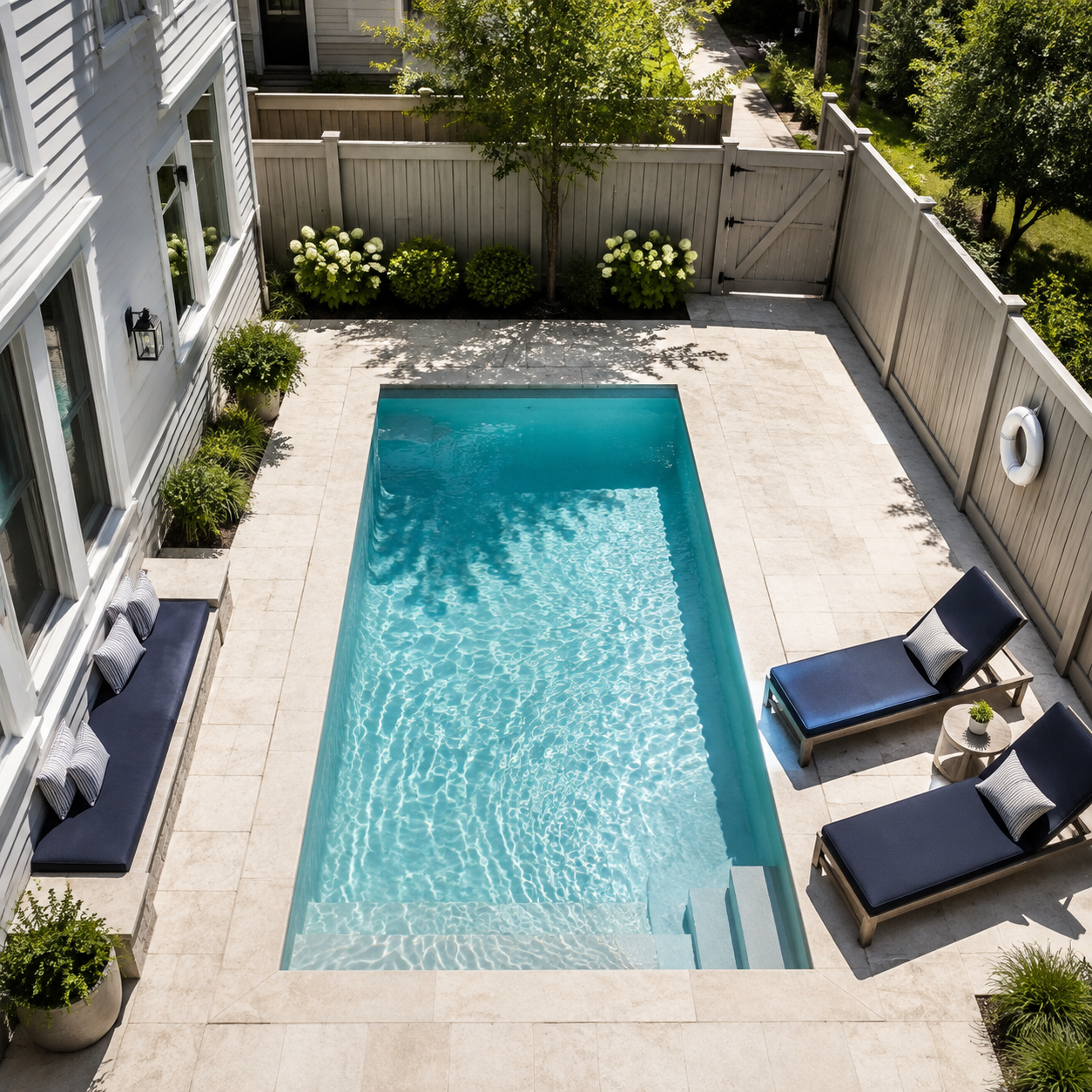
A compact pool yard does not need to hold every outdoor product at once. It needs a clear route, a dependable barrier, furniture sized for actual use, and separate homes for wet gear, tools, chemicals, and the cover. When inground pool ideas begin with movement and safety zones, storage becomes part of the layout instead of another layer of clutter.
✅ Last Updated on September 28, 2026 by BIG Smart Team