
A passionflower can grow rapidly yet produce few flowers. It may also overwhelm a fence, develop tangled stems, or wilt repeatedly in a small container. These problems often begin when the vine is planted before its mature size, support needs, and growing conditions are understood.
Good Passionflower Plant care starts with matching the plant to the available space. The goal is not simply fast growth—it is a healthy, supported vine that remains accessible for watering, pruning, and inspection.
1. Confirm the Variety Before Planting
Passionflowers vary considerably. Some remain relatively manageable, while others spread aggressively in a suitable climate. Cold tolerance, flower color, mature size, and fruit production also differ.
Check the botanical name and local growing guidance before buying. This helps determine whether the plant belongs in the ground, a large container, or a location where spreading roots and shoots can be controlled.
Only consume fruit after positively identifying the species and confirming that it is grown for edible fruit.
2. Give the Vine a Strong Support
Thin decorative stakes rarely support a mature passionflower. Its tendrils need narrow surfaces they can wrap around, while the overall structure must tolerate the vine’s eventual weight.
Suitable options include:
- A freestanding metal trellis
- Strong wire attached to suitable posts
- An arbor with open latticework
- A pergola positioned for pruning access
Leave a small gap between the support and a wall or fence so air can circulate and stems remain reachable.
3. Fix Poor Flowering by Checking Light First
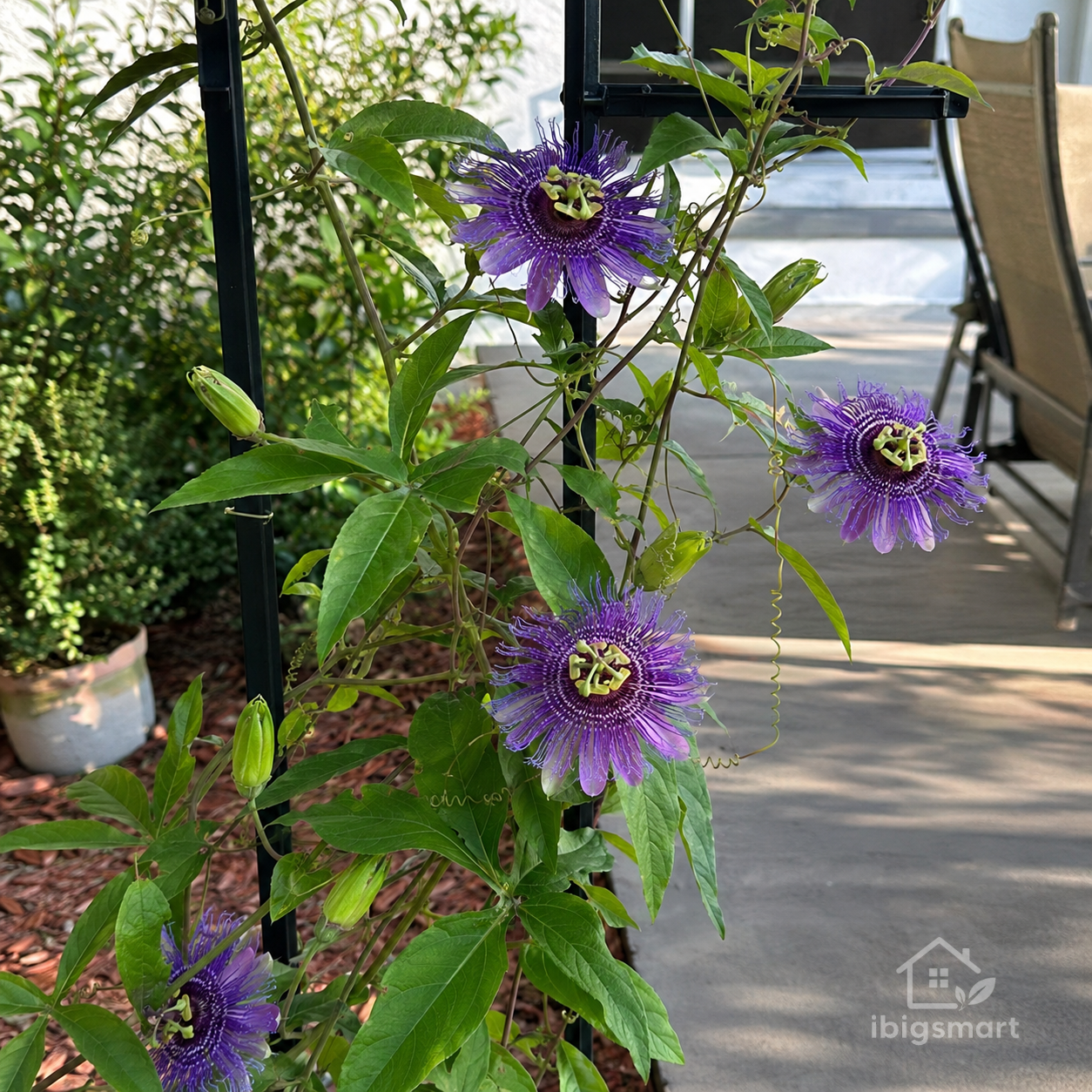
A vine can produce abundant leaves without many flowers when it receives insufficient light. Many passionflowers bloom best with generous sunlight, although protection from extreme afternoon heat may be helpful in very hot climates.
Observe the planting location throughout the day. Nearby trees, rooflines, and fences may create more shade than expected.
Avoid moving immediately to fertilizer. If light is the underlying problem, feeding the plant will not correct the location.
4. Avoid Excess Nitrogen
High-nitrogen fertilizer can encourage vigorous foliage at the expense of flowers. Before feeding, consider whether the vine is already producing long, leafy stems.
If fertilizer is needed, choose one appropriate for flowering plants and follow its label. Applying more than recommended can damage roots and create additional growth that must later be pruned.
5. Keep Moisture Consistent Without Waterlogging
Newly planted vines need regular attention while their roots become established. Mature plants may tolerate short dry periods better, but repeated wilting can reduce flowering and stress the plant.
Water deeply and allow excess moisture to drain. A layer of organic mulch can slow evaporation, but keep it away from the main stem.
Container-grown plants dry faster and should be checked more frequently during hot or windy weather.
6. Use a Container Large Enough for the Roots
A small nursery pot cannot support a vigorous vine indefinitely. If the plant must remain on a patio or balcony, move it into a stable container with drainage holes.
Choose a pot that will not tip when the trellis becomes covered in foliage. A wheeled plant caddy can make a heavy container easier to reposition without dragging it across the patio.
7. Train New Stems Before They Tangle
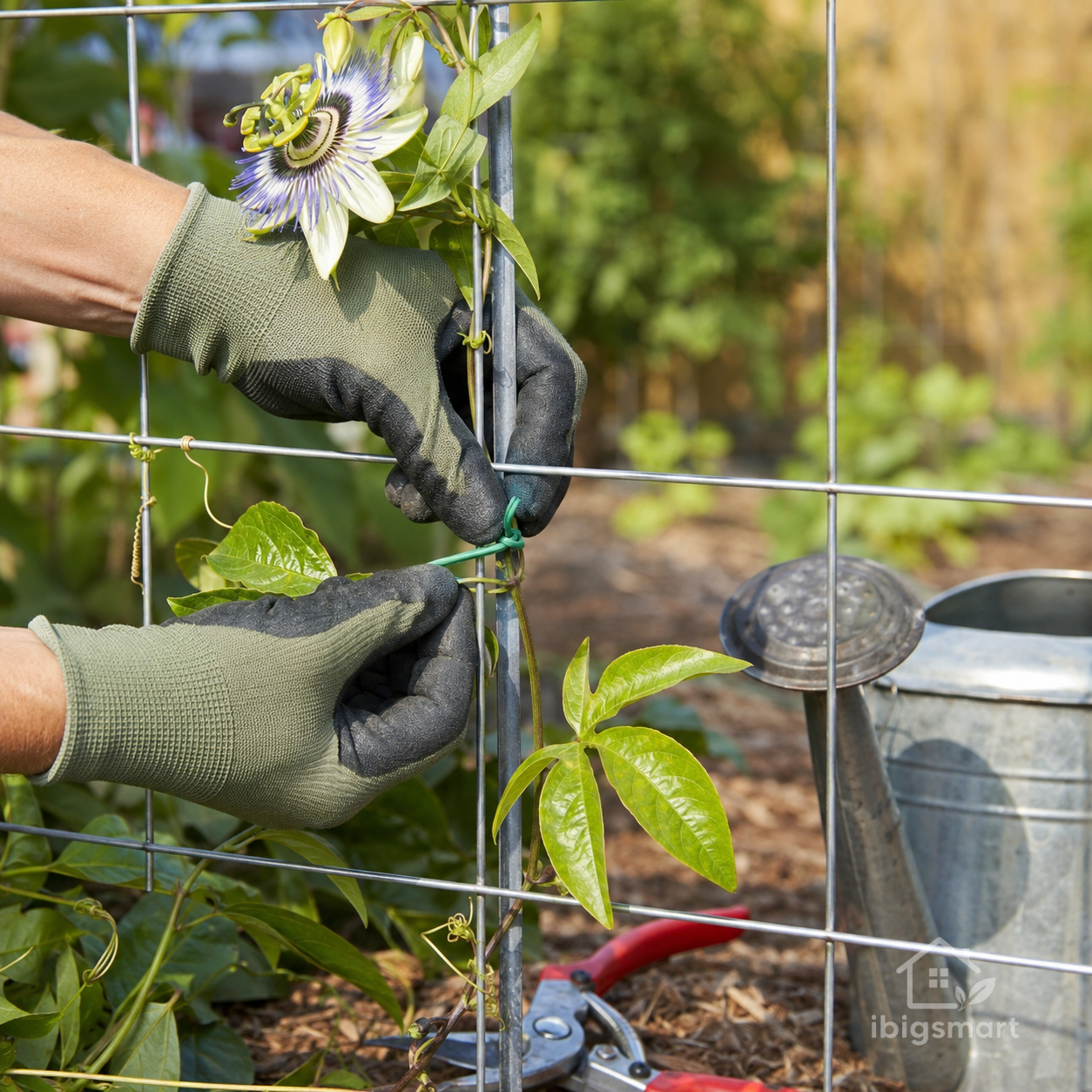
Inspect new growth regularly and guide flexible stems toward open areas of the support. Attach them loosely so the ties do not cut into expanding stems.
Remove shoots growing across doors, gutters, pathways, or fragile plants. Small corrections during active growth are easier than untangling a dense vine later.
8. Prune for Access, Airflow, and Size
Pruning time depends on the species and climate, but damaged, dead, or badly placed stems can be removed when identified.
For a larger seasonal trim:
- Learn whether the variety flowers on new or older growth.
- Remove tangled stems gradually.
- Retain a clear structural framework.
- Avoid removing most of the plant during extreme weather.
- Clean tools before moving between plants.
9. Check Leaves Before Treating Pests
Yellowing, spotting, or damaged leaves do not automatically mean the vine needs pesticide. First inspect both leaf surfaces and consider watering, drainage, heat, and nutrient problems.
A gentle spray of water may dislodge some soft-bodied pests. If treatment becomes necessary, identify the pest and choose a product labeled for that plant and situation.
10. Prepare for Cold Weather
Some passionflowers tolerate cold better than others. Container plants are especially vulnerable because their roots have less insulation.
Depending on the variety and climate, winter preparation may include:
- Moving a container to a protected location
- Insulating the pot
- Mulching the root area
- Reducing watering as growth slows
- Pruning only when appropriate for the variety
A thriving Passionflower Plant needs more than a sunny location. Strong support, steady moisture, restrained feeding, and regular training prevent the vine from becoming an exhausting garden problem.
✅ Last Updated on September 28, 2026 by BIG Smart Team