
Ferns can look healthy at the store and develop brown tips only a few weeks after coming home. The usual problem is not a lack of effort. Different fern varieties need different amounts of moisture, humidity, light, and space.
Understanding Fern Varieties and Care before choosing a plant can prevent repeated replacements and help you select simple tools that solve the conditions in your home.
Choose a Fern That Fits Your Space
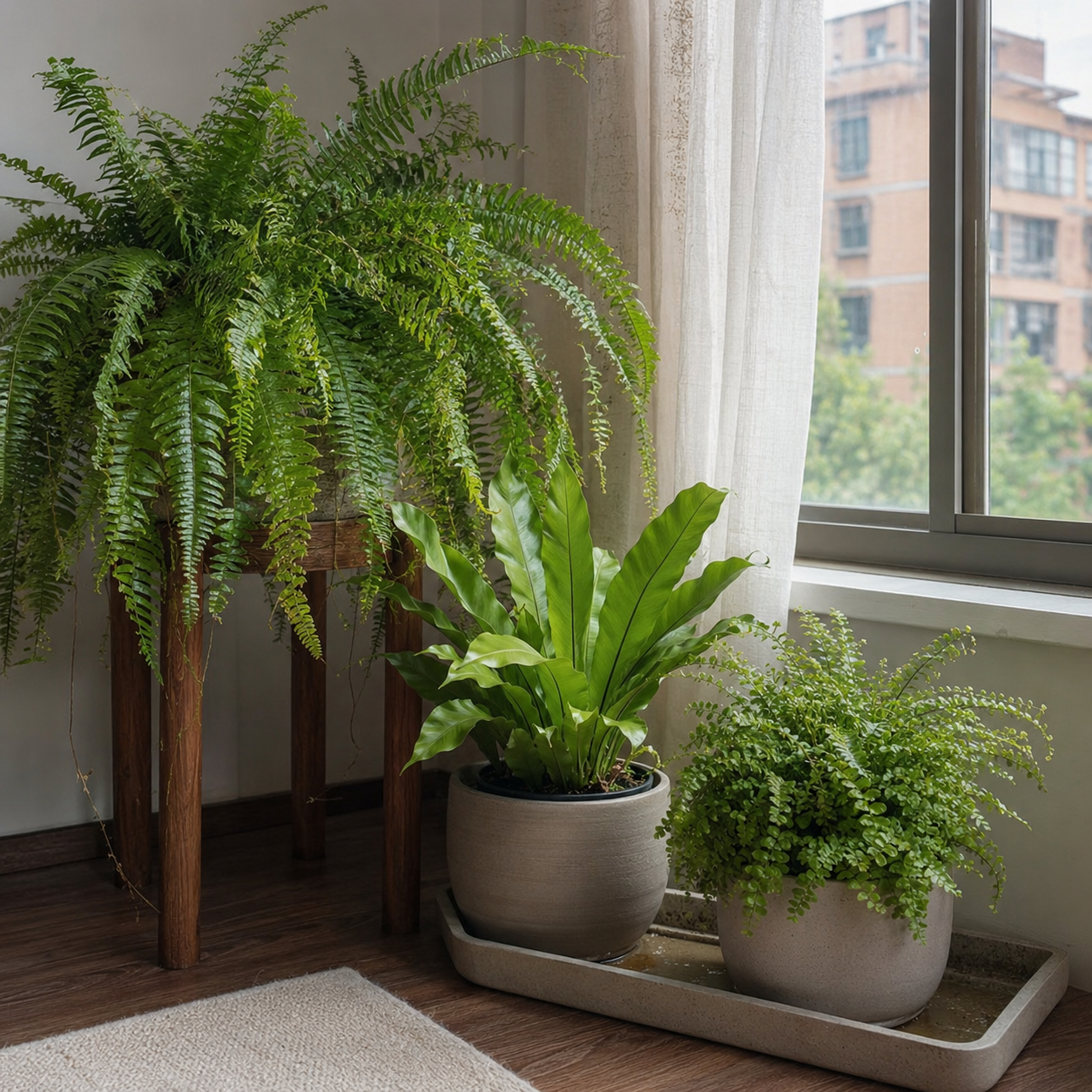
Boston Fern
Boston ferns produce long, arching fronds and look especially attractive in hanging baskets. They prefer bright, indirect light and consistently moist soil.
They can struggle beside heating vents or in rooms with very dry air. Their spreading fronds also require more space than they appear to need when young.
Useful for:
- Bright bathrooms
- Covered porches in suitable weather
- Hanging planters away from direct afternoon sun
Bird’s Nest Fern
The bird’s nest fern has broad, wavy fronds rather than the finely divided leaves associated with many ferns. Its compact shape makes it easier to place on a cabinet or plant stand.
Water the soil around the plant rather than pouring water directly into the central crown, where trapped moisture may cause problems.
Useful for:
- Small rooms
- Shelves and low plant stands
- Homes needing a less delicate-looking fern
[Affiliate Link: narrow-spout indoor watering can]
Maidenhair Fern
Maidenhair ferns have delicate leaves and thin, dark stems. They are beautiful but less forgiving when their soil becomes completely dry.
This variety is better suited to someone who checks plants regularly. A self-watering planter may help maintain more even moisture, but the reservoir should still be monitored.
Useful for:
- Naturally humid rooms
- Bright locations without direct sun
- Plant owners who water consistently
[Affiliate Link: self-watering planter with removable reservoir]
Button Fern
Button ferns have small, rounded leaflets and a more compact growth habit. They are useful when a Boston fern would be too large.
They still appreciate humidity but may be easier to position in a small home. Keep them away from intense sunlight and drying drafts.
Useful for:
- Desks and compact plant stands
- Smaller apartments
- Grouped indoor plant displays
Japanese Painted Fern
Japanese painted ferns are generally grown outdoors. Their silver-green fronds can brighten a shaded garden without relying on flowers.
They work best where the soil remains moist but drains well. Check that the selected variety is suitable for the local climate before planting.
Useful for:
- Shaded garden beds
- Woodland-style borders
- Areas beneath trees with filtered light
Autumn Fern
Autumn fern produces new growth with warm copper or bronze coloring that gradually changes as the fronds mature. It can add seasonal color to a shaded outdoor area.
Allow enough room for its mature size and protect the soil with organic mulch to slow moisture loss.
Useful for:
- Shaded paths
- Mixed foliage borders
- Areas that need color without full sun
Why Fern Tips Turn Brown
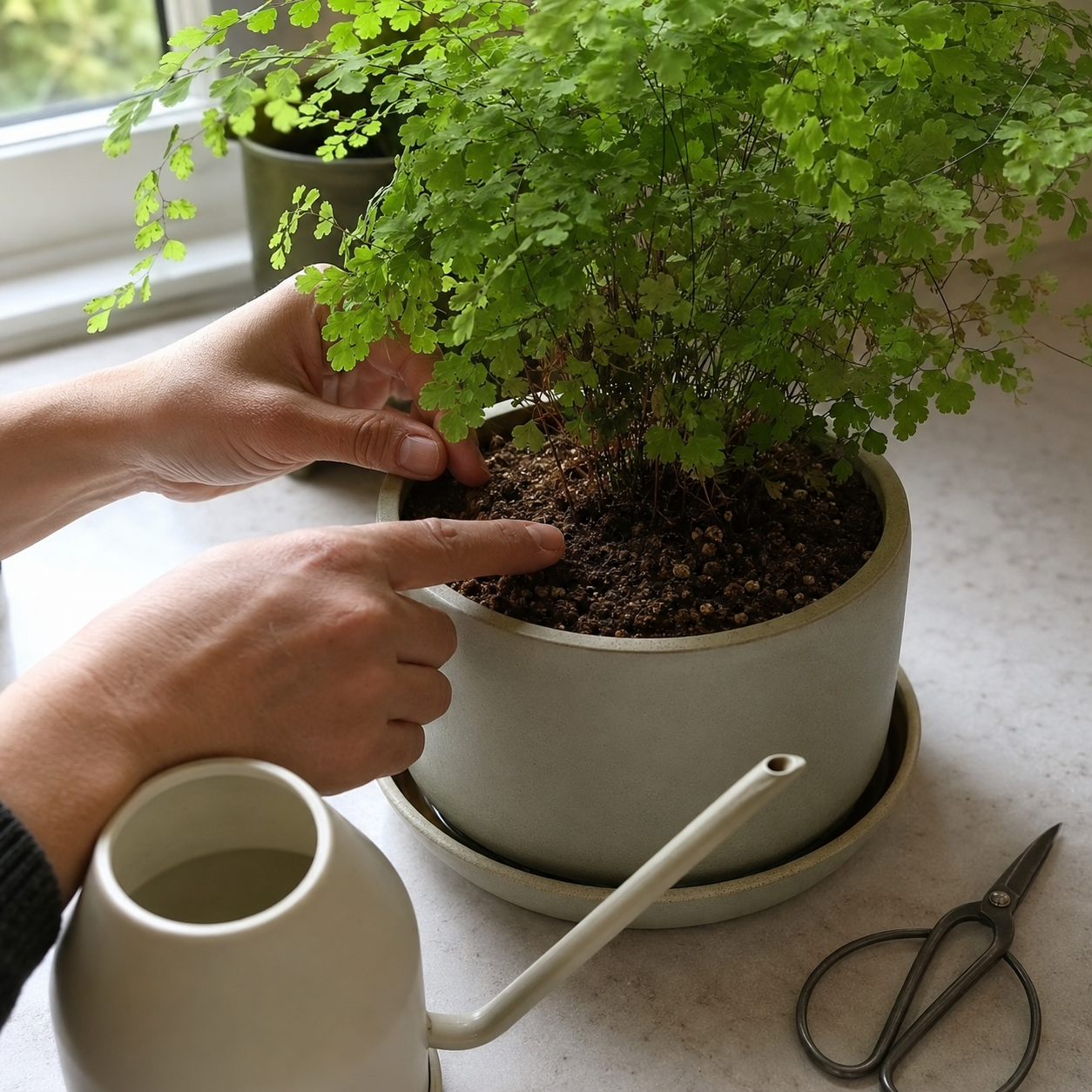
Brown tips do not always mean the fern needs more water. Common causes include:
- Dry indoor air
- Soil drying too far between waterings
- Excess fertilizer
- Mineral buildup in the potting mix
- Direct sunlight scorching the fronds
- Hot or cold air from vents and doors
Check the soil before changing the watering routine. If it is still wet, adding more water may worsen the problem.
A basic moisture meter can provide another reference point, although it should be used together with checking the soil by hand.
How to Water Ferns Without Drowning Them
Most indoor ferns prefer soil that remains lightly moist rather than saturated.
Water thoroughly until excess water drains from the bottom of the pot. Empty the saucer afterward so the roots are not left standing in water.
The watering frequency will change according to:
- Pot size
- Pot material
- Room temperature
- Humidity
- Amount of light
- Season
Instead of watering on a rigid calendar, check the soil regularly and respond to its actual condition.
Improve Humidity Where the Fern Actually Sits
A fern placed in a dry room may develop crisp edges even when its soil is moist. Moving it away from heating or air-conditioning vents is the first step.
Grouping plants can create a slightly more humid area around the foliage. A pebble tray may help locally when the pot sits above the water rather than in it.
For consistently dry rooms, a small hygrometer can show whether humidity is the likely problem. A room humidifier may be more effective than repeatedly misting the leaves.
Give Ferns Bright Light Without Harsh Sun
Many indoor ferns grow best in bright, indirect light. A window covered by a sheer curtain can soften strong sunlight, while a location several feet from a bright window may work for some varieties.
Signs of excessive light can include faded color, scorched patches, or rapidly drying soil. Weak, sparse growth may indicate insufficient light.
If the home has few suitable windows, a small full-spectrum grow light with a timer can provide more consistent conditions.
[Affiliate Link: full-spectrum grow light with timer]
Use a Pot That Allows Drainage
A decorative container without a drainage hole can hold more water than expected. Either keep the fern in a removable nursery pot inside the decorative container or choose a planter with drainage and a saucer.
Repot only when the fern has outgrown its container or the potting mix has become compacted. A pot that is only slightly larger than the root ball is usually easier to water correctly than an oversized container.
Use a loose potting mix that retains some moisture while allowing excess water to drain.
Trim Damage Without Removing Healthy Growth
Brown or broken fronds will not become green again. Remove them close to the soil using clean, sharp scissors.
Avoid cutting healthy fronds merely to make the plant look symmetrical. Ferns naturally produce growth in different directions, and unnecessary pruning reduces the foliage available to support the plant.
[Affiliate Link: compact precision pruning scissors]
A Practical Fern-Care Routine
Once a week:
- Check the soil rather than watering automatically.
- Look beneath the fronds for pests.
- Remove fallen or damaged foliage.
- Confirm that the plant is not touching a hot or cold window.
- Rotate the pot slightly if growth is leaning toward the light.
Once a month, inspect the drainage hole and check whether roots are becoming crowded. Keep fertilizer light and follow the product directions rather than assuming more will produce faster growth.
The simplest approach to Fern Varieties and Care is to match the plant to the room. A suitable fern in the right light and humidity will usually need fewer products and less corrective care than a demanding variety placed in the wrong conditions.
✅ Last Updated on September 28, 2026 by BIG Smart Team