
A small living room can quickly feel crowded, dark, or difficult to decorate.
You may have enough furniture for everyday life, but once everything is in place, the room suddenly feels smaller than expected. A bulky sofa blocks the walkway. The coffee table takes up too much floor space. Storage starts creeping into every corner.
The good news is that a small living room does not need to feel cramped.
With the right furniture proportions, lighting, colors, storage, and layout, you can make even a compact space feel more open, comfortable, and organized.
These small living room decor ideas focus on practical changes that can visually expand your space without requiring a major renovation.
1. Choose Furniture With Visible Legs
Furniture that sits directly on the floor can make a small room feel heavy.
Instead, look for sofas, chairs, consoles, and side tables with visible legs.
When you can see more of the floor underneath your furniture, the room feels more open because your eye can travel farther through the space.
Slim wooden or metal legs work particularly well in small living rooms.
You do not need every piece of furniture to have tall legs, but choosing one or two elevated pieces can make a surprising difference.
2. Use a Large Mirror to Reflect Light
Mirrors are one of the easiest ways to make a small living room feel larger.
They reflect both natural and artificial light while visually extending the room beyond the wall.
A large mirror positioned across from or near a window can help brighten darker areas during the day.
You can also place a mirror above a console table, fireplace, or sofa.
In very small rooms, one large mirror often works better than several small mirrors because it creates a cleaner, less cluttered look.
3. Choose a Light and Consistent Color Palette
Dark colors can be beautiful, but in a compact living room, too many contrasting colors can break the space into smaller visual sections.
A lighter, more consistent palette can make the room feel calmer and more spacious.
Consider shades such as:
- Warm white
- Cream
- Soft beige
- Light gray
- Pale taupe
- Muted sage
This does not mean everything needs to be white.
You can still introduce deeper colors through pillows, artwork, plants, and small accessories.
The goal is to keep the larger surfaces visually connected.
4. Use a Rug That Is Large Enough
A tiny rug in the middle of a small living room can actually make the room look smaller.
This happens because the rug creates a small visual island surrounded by exposed flooring.
A larger rug helps connect the furniture and makes the seating area appear more generous.
Ideally, the front legs of your sofa and chairs should sit on the rug.
Choose a simple pattern or subtle texture if you want the room to feel calm and uncluttered.
5. Replace a Bulky Coffee Table
Large coffee tables can dominate a small living room.
If you constantly find yourself walking around the table or bumping into its corners, it may be taking up more space than it is worth.
Consider alternatives such as:
- A narrow coffee table
- A small round table
- Nesting tables
- A storage ottoman
- Two small side tables
Round tables can be particularly helpful because they remove sharp corners and improve movement through tight spaces.
Nesting tables are useful because they can be separated when needed and stacked together afterward.
6. Use Vertical Wall Space
When floor space is limited, look upward.
Walls can provide valuable storage and display space without making the room harder to walk through.
Floating shelves can hold books, plants, photographs, or decorative objects.
Tall narrow bookcases can also provide more storage while using relatively little floor space.
Try to keep the shelves visually organized.
Leaving some empty space between objects prevents vertical storage from becoming another source of clutter.
7. Hang Curtains Higher
Curtain placement can influence how large your windows and walls appear.
Instead of installing the curtain rod directly above the window frame, hang it several inches higher.
You can also extend the rod slightly beyond the width of the window.
This makes the window appear taller and wider.
Floor-length curtains can create a strong vertical line that draws the eye upward, making the ceiling feel higher.
Lightweight curtains are especially useful in small living rooms because they soften the windows without blocking too much natural light.
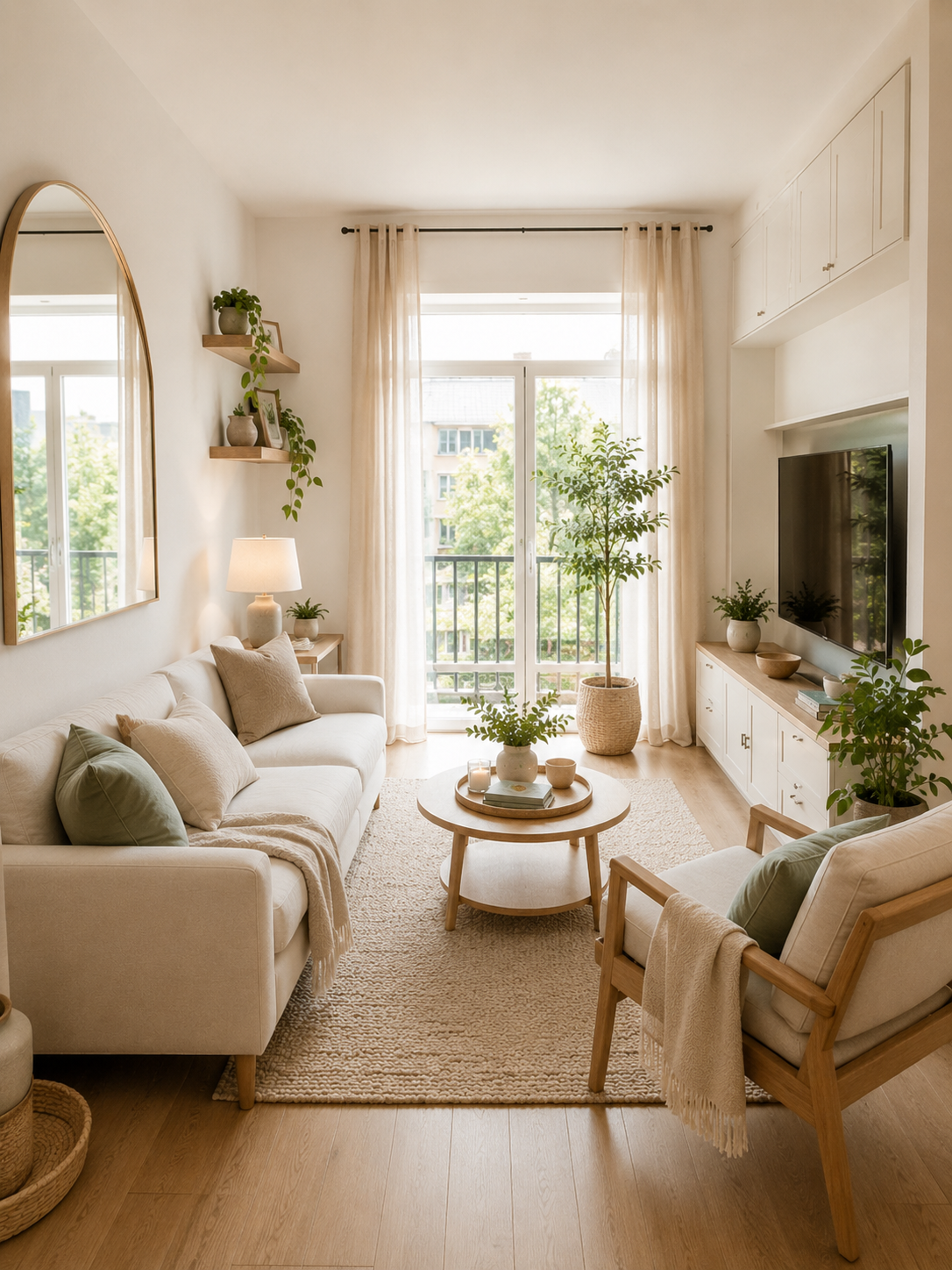
8. Choose Multipurpose Furniture
In a small living room, every piece of furniture should earn its place.
Multipurpose furniture can reduce the number of items you need.
For example, a storage ottoman can function as a footrest, coffee table, extra seat, and hidden storage space.
A console table with drawers can provide storage while also creating a place for lamps or decor.
A side table with shelves can hold books and baskets instead of requiring an additional storage unit.
The more functions one piece can provide, the easier it becomes to keep the room uncluttered.
9. Add Hidden Storage
Visual clutter makes small spaces feel even smaller.
Items such as remotes, charging cables, toys, magazines, and blankets can quickly overwhelm a compact room.
Hidden storage helps keep everyday objects nearby without leaving them visible.
Useful options include:
- Storage ottomans
- Decorative boxes
- Baskets with lids
- Coffee tables with drawers
- Storage benches
- Media consoles with cabinets
Before buying more storage, think about what actually needs to be hidden.
Choosing storage based on specific items usually works better than simply adding more containers.
10. Keep the Pathways Clear
A beautiful room can still feel uncomfortable if you constantly have to walk around furniture.
Small living room layouts should prioritize movement.
Try to create a clear path between the entrance, sofa, television, and other frequently used areas.
Avoid placing side tables, plants, baskets, or decorative objects directly in major walkways.
Sometimes moving a chair only a few inches can dramatically improve how spacious the room feels.
Good layout is often more important than adding new decor.
11. Use Wall-Mounted Lighting
Floor lamps and table lamps are useful, but they also take up valuable space.
If your living room is especially small, wall-mounted lighting can free up both the floor and side tables.
Wall sconces can work beside a sofa, above a reading chair, or near shelving.
Plug-in wall sconces are particularly convenient because they can provide the look of built-in lighting without requiring major electrical work.
This can be a useful solution when there is not enough room for a traditional side table and lamp.
12. Keep Window Areas Open
Natural light is one of the most valuable features in a small room.
Avoid blocking windows with tall furniture whenever possible.
Heavy curtains, large plants, or bookshelves placed directly in front of windows can reduce light and make the room feel more enclosed.
Instead, allow as much daylight as possible to enter the room.
If privacy is needed, consider sheer curtains or light-filtering window treatments.
Brighter rooms generally feel more spacious than darker ones.
13. Use Fewer, Larger Decorative Pieces
It may seem logical to use lots of tiny decorations in a small room.
However, too many small objects can create visual clutter.
Instead, try using fewer pieces with slightly more impact.
For example, one larger vase can look cleaner than several small ornaments.
One substantial piece of wall art can feel calmer than a wall filled with many unrelated frames.
A single decorative tray can organize several everyday items into one visual group.
The goal is not to remove personality from the room.
It is to make each item feel intentional.
14. Add Plants Without Taking Over the Floor
Greenery can make a small living room feel fresh and inviting, but large floor plants are not always practical.
Instead, use smaller plants on shelves, windowsills, side tables, or wall-mounted planters.
Trailing plants can add visual interest without using valuable floor space.
You can also place one tall, narrow plant in an unused corner.
If natural light is limited or plant care is difficult, realistic artificial plants can provide a similar decorative effect.
15. Create One Strong Focal Point
Too many focal points can make a small living room feel busy.
Instead, choose one area that immediately draws attention.
This might be:
- A large piece of artwork
- A fireplace
- A statement mirror
- A beautiful sofa
- A styled media wall
- A feature wall
Once you choose the focal point, keep the surrounding decor simpler.
This gives the eye somewhere to rest and helps the room feel more organized.
How to Make a Small Living Room Look Bigger Without Remodeling
You do not need to knock down walls to make a small living room feel larger.
Start by improving the things that influence visual space the most.
Reduce unnecessary furniture.
Keep pathways open.
Let natural light enter the room.
Choose furniture that fits the scale of the space.
Use vertical storage instead of filling the floor.
Then look at the room as a whole.
If several small pieces are competing for attention, remove some of them and allow more empty space.
Empty space is not wasted space.
In a small room, it can be one of the most important design elements.
What Furniture Works Best in a Small Living Room?
Furniture for a compact living room should fit the proportions of the room rather than simply being labeled “small.”
A very tiny sofa is not always the best choice.
Sometimes one comfortable medium-sized sofa works better than several small chairs because it reduces the number of separate furniture pieces.
Look for furniture with:
- Slim arms
- Visible legs
- Simple shapes
- Built-in storage
- Lightweight visual profiles
- Multiple functions
Measure your living room before purchasing furniture.
Pay attention not only to width and depth but also to how much walking space will remain around each piece.
How to Decorate a Small Living Room on a Budget
You can improve a small living room without replacing all of your furniture.
Start with inexpensive changes.
Move furniture away from blocked windows.
Remove unnecessary side tables.
Rearrange shelves.
Use matching baskets to organize clutter.
Replace heavy curtains with lighter ones.
Add a large mirror.
Change pillow covers instead of buying new pillows.
Even moving decor from one room to another can refresh the space without spending anything.
Before buying something new, ask whether it solves a real problem.
In small rooms, useful decor is usually better than decor that only takes up space.
Small Living Room Mistakes to Avoid
Some decorating choices can unintentionally make a compact room feel smaller.
One of the most common mistakes is filling every empty wall or corner.
Another is choosing furniture that is too large for the available space.
Too many small rugs, tables, baskets, and decorations can also create visual noise.
Heavy window treatments may block valuable light.
And pushing every piece of furniture tightly against the walls does not always create more usable space.
Sometimes bringing the sofa slightly forward or creating a more intentional seating arrangement can actually make the room feel better balanced.
Final Thoughts
A small living room does not need to feel cramped or limited.
The most effective approach is to make every element work harder.
Use furniture that suits the size of the room, take advantage of vertical space, reduce unnecessary clutter, and allow natural light to move through the space.
Simple additions such as a large mirror, well-sized rug, lighter curtains, multipurpose furniture, or hidden storage can completely change how the room feels.
Instead of trying to fit more into a small living room, focus on making the space you already have feel open, comfortable, and intentional.
✅ Last Updated on September 28, 2026 by BIG Smart Team