
A sloped backyard often looks manageable until a heavy shower exposes the real problem. Mulch collects at the bottom, narrow channels appear in bare soil, and the shortest route across the yard becomes slick. Adding more decorative stone may hide the damage for a few weeks, but it does not explain where the water begins or why it gains speed.
The right landscape ideas for a slope should make water easier to understand, keep soil covered, and provide a route that people can use safely. Start with small reversible changes; leave structural walls, major grading, and drainage near buildings to qualified local professionals.
1. Find the Source Before Repairing the Scar
The bare patch halfway down a slope may not be the source of the problem. Water can arrive from a roof outlet, an uphill patio, a compacted lawn, a neighboring property, or a low point along a fence.
Photograph the yard before rain, during a safe light shower, and again afterward. Mark where runoff first appears, where it accelerates, and where sediment settles. Never stand in fast-moving water or inspect during lightning.
2. Measure the Slope Without Guessing
Two stakes, mason string, a line level, and a measuring tape can provide a basic estimate of rise over run. This is useful for sketching planting zones and discussing the site with a contractor; it is not a substitute for engineering calculations.
Record several measurements because residential grades are rarely uniform. Also note abrupt dips, buried structures, tree roots, and areas that feel soft underfoot.
3. Protect Bare Soil While Planning
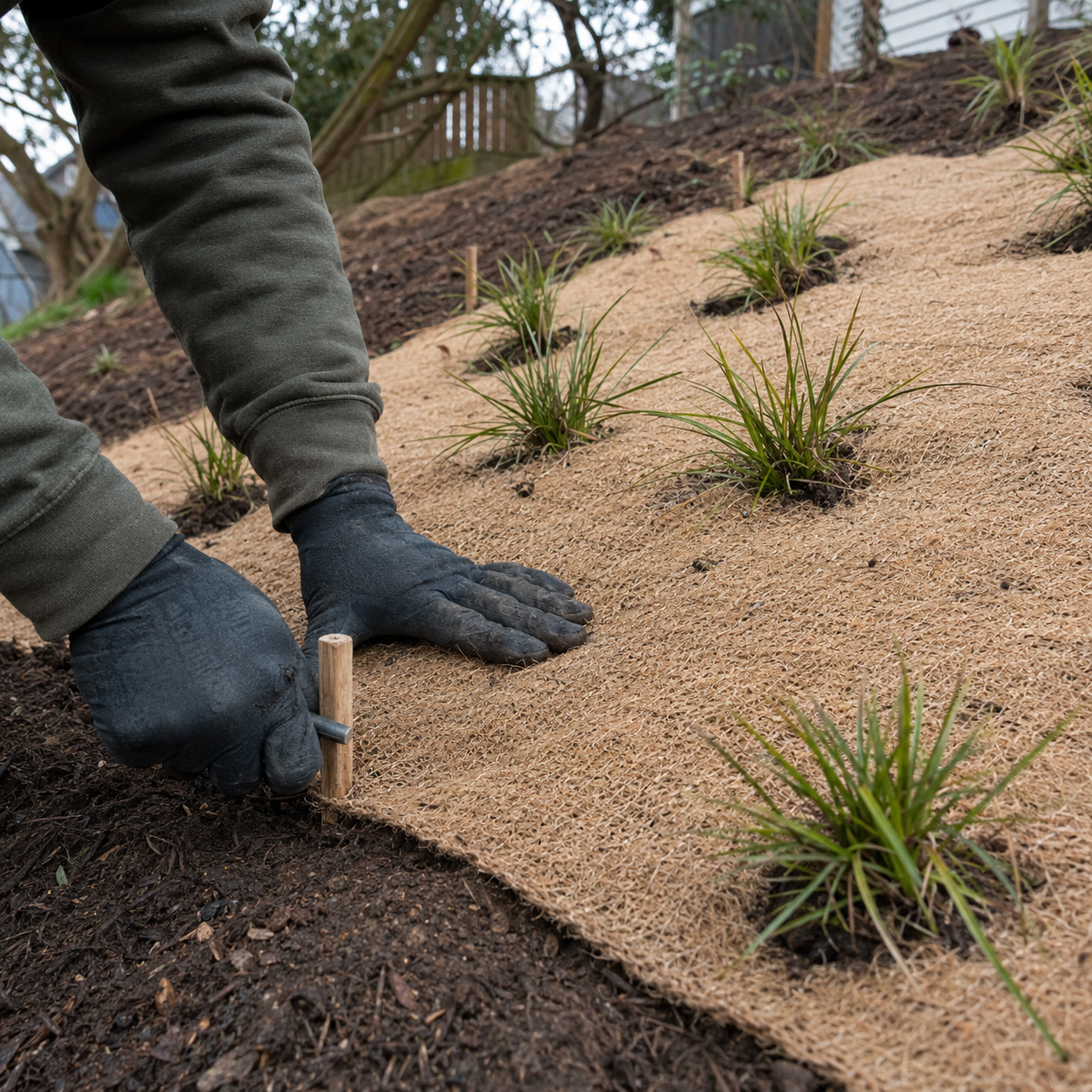
Exposed soil can deteriorate during the weeks between clearing and planting. Use a biodegradable erosion-control blanket intended for the slope and installation conditions, then secure it according to the manufacturer’s directions.
The blanket should maintain contact with the soil rather than bridge over hollows. Do not use loose plastic sheeting as a general slope cover; it can concentrate runoff and create a slippery surface. The University of Minnesota Extension notes that seeding or erosion blankets are particularly useful on sloped planting sites. University of Minnesota Extension
4. Interrupt Long Runs of Open Ground
Water generally becomes more erosive as it travels down a long uninterrupted surface. Broad planting bands, correctly installed coir wattles, or shallow contour features may slow sheet flow and trap small amounts of moving sediment.
These products must follow the contour and remain well anchored. They should not be placed where failure could direct water toward a foundation, retaining wall, or neighboring property.
5. Establish Roots at Several Depths
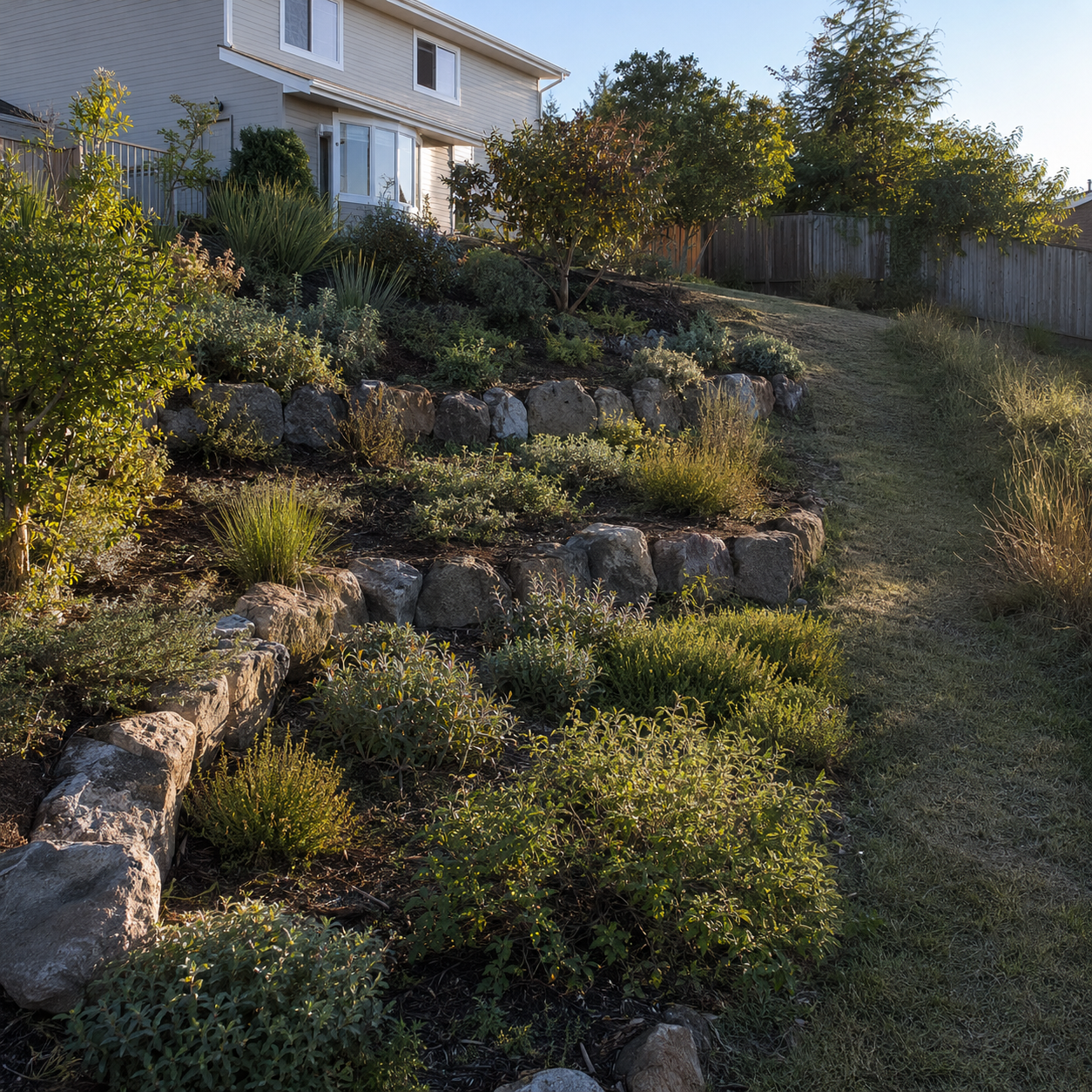
One shallow-rooted groundcover is rarely the complete answer. A mixed planting can combine fibrous-rooted grasses or sedges, spreading perennials, compact shrubs, and existing healthy trees.
Select plants for the actual light, soil, moisture, climate, and local invasive-species rules. Space them for mature growth, but cover temporary gaps with an appropriate erosion blanket or light organic mulch that will remain in place. Vegetation can reduce surface erosion; it cannot stabilize a failing structural slope.
6. Avoid Digging One Straight Path Downhill
A path that runs directly from top to bottom can act like a drainage chute. Where space permits, use a diagonal or gently switchbacked route with stable landings. This reduces the apparent steepness and gives people places to pause.
Surface material, width, edging, steps, and handrails must suit the grade and users. Loose gravel is not appropriate for every slope. If reliable access is essential, consult a landscape professional familiar with local accessibility and construction requirements.
7. Create Shallow Planting Terraces—Not an Improvised Tall Wall
Several broad, low planting shelves can be easier to maintain than one continuous incline. They also create pockets for shrubs, herbs, or perennial groups without requiring people to balance on the slope.
Do not stack landscape timbers or blocks into a tall wall without understanding drainage, soil pressure, footing, permits, and property-line requirements. Bulging soil, cracks, leaning walls, sinkholes, or sudden changes in grade require professional assessment.
8. Keep Heavy Features Away from Questionable Edges
A shed, filled raised bed, large water container, or stone patio adds substantial weight. Placing one near the top of an unstable slope can create risks that are not visible in a garden sketch.
Use the flatter, verified portion of the yard for heavy features. Keep inspection access around walls, drains, fences, and utilities instead of covering warning signs with plants.
9. Treat a Shaded Tree Slope Gently
Grass often thins beneath mature trees because of shade, root competition, and dry soil. Aggressive tilling, deep terracing, or adding a thick layer of soil can damage established roots.
Preserve existing roots and use small planting pockets between them. Shade-tolerant groundcovers, sedges, leaf litter, and carefully placed stepping stones can reduce exposed ground without changing the grade dramatically. Ask a certified arborist before cutting major roots or building within the critical root area.
10. Water New Plants Without Creating New Channels
New slope plantings need consistent moisture while roots establish, but a strong hose stream can dislodge soil. Use slow, distributed watering and check whether water is soaking in or running downhill.
A pressure-regulated dripline or short soaker line may work in some layouts. Divide long elevation changes into appropriate zones and follow the irrigation manufacturer’s limits. The U.S. Environmental Protection Agency recommends choosing suitable plants, supporting soil health, and maintaining irrigation carefully as parts of a water-smart landscape. U.S. EPA WaterSense
11. Inspect the Bottom of the Slope
Slowing water uphill is only part of the plan. The lower area still needs a lawful, stable destination for runoff. Check for buried drains, blocked outlets, sediment buildup, soggy fences, and water escaping toward another property.
After major storms, inspect blankets, wattles, path edges, steps, and planted areas. Re-anchor loose materials promptly and replace failed plants before bare gaps expand.
A Practical Order of Work
- Document water movement and visible damage.
- Confirm utilities, boundaries, permits, and drainage rules.
- Measure the grade and identify safe access.
- Seek professional advice for structural warning signs.
- Protect exposed soil temporarily.
- Correct the source of concentrated runoff.
- Build approved paths or low planting shelves.
- Plant in contour bands and protect gaps.
- Water slowly while plants establish.
- Reinspect after every significant storm.
Useful landscape ideas do not fight a slope by covering it with decoration. They shorten the distance water can travel over bare ground, keep roots growing across the site, and make routine inspection possible. A measured plan is safer and usually less expensive than repeatedly replacing washed-away mulch and plants.
✅ Last Updated on September 28, 2026 by BIG Smart Team