
A front yard can look unfinished even when it is regularly mowed. Thin grass draws attention to bare soil, a narrow strip of plants fails to balance the house, and several unrelated decorations make the entrance feel busier rather than more welcoming.
A useful simple landscaping front yard plan does not require replacing everything. Correct the most visible problems, repeat a small group of suitable plants, and make each new feature easy to maintain.
1. Choose the Three Problems That Matter Most
Stand at the curb and take one photograph in neutral daylight. Instead of listing every imperfection, identify the three areas that attract attention first. They might be:
- A bare foundation
- A patch of failing lawn
- An overgrown shrub covering a window
- An untidy bed edge
- A downspout emptying beside the house
- An entrance that disappears after dark
Solving three connected problems usually creates a clearer result than scattering new plants across the entire yard.
2. Test the Soil Before Treating Every Bare Patch
Thin grass does not always need more fertilizer. Shade, compaction, drainage, foot traffic, unsuitable grass, and incorrect watering can produce similar symptoms.
Collect a representative soil sample from the problem area and use a qualified laboratory or local extension service when possible. The University of Illinois Extension recommends sampling lawn and planting areas separately because their sampling depths and uses differ. University of Illinois Extension soil-sampling guidance
3. Repair One Lawn Area—or Stop Forcing Grass There
If the site receives enough light and the soil problem can be corrected, repair the patch with a grass type suited to the local climate. Prepare the soil, follow the seed or sod instructions, and protect the area while roots establish.
When grass repeatedly fails beneath a mature tree, beside a hot driveway, or on a dry slope, expand a nearby planting bed instead. This reduces the number of weak lawn islands that need continual reseeding.
4. Widen a Foundation Bed Enough to Be Useful
A very narrow line of plants can look pressed against the house and leave no room for mature growth. Widen the bed only where it improves the proportions of the facade and simplifies mowing.
Keep the finished grade and mulch below siding, vents, and other moisture-sensitive building components. Preserve access to utility meters, hose connections, cleanouts, and windows.
5. Select Plants by Mature Size
Small nursery shrubs are often planted too close to walls and walkways because the empty spaces look unfinished. Check the expected mature height and width, then place plants so they will not require constant trimming.
For a simple foundation bed, use a limited combination:
- One compact evergreen for year-round structure
- One flowering shrub or medium perennial
- One low groundcover or edging plant
Repeat the same plants instead of buying one of everything. Confirm that every choice suits the local hardiness zone, light, soil moisture, and available width.
6. Keep Shrubs Clear of the House
Leave enough room to inspect the wall, clean windows, and reach outdoor equipment. Plants that lean against siding can trap debris and make maintenance difficult.
Avoid placing thorny or rigid plants where people step out of a car or pass close to the front walk. Preserve clear sightlines near the driveway, street, and entrance.
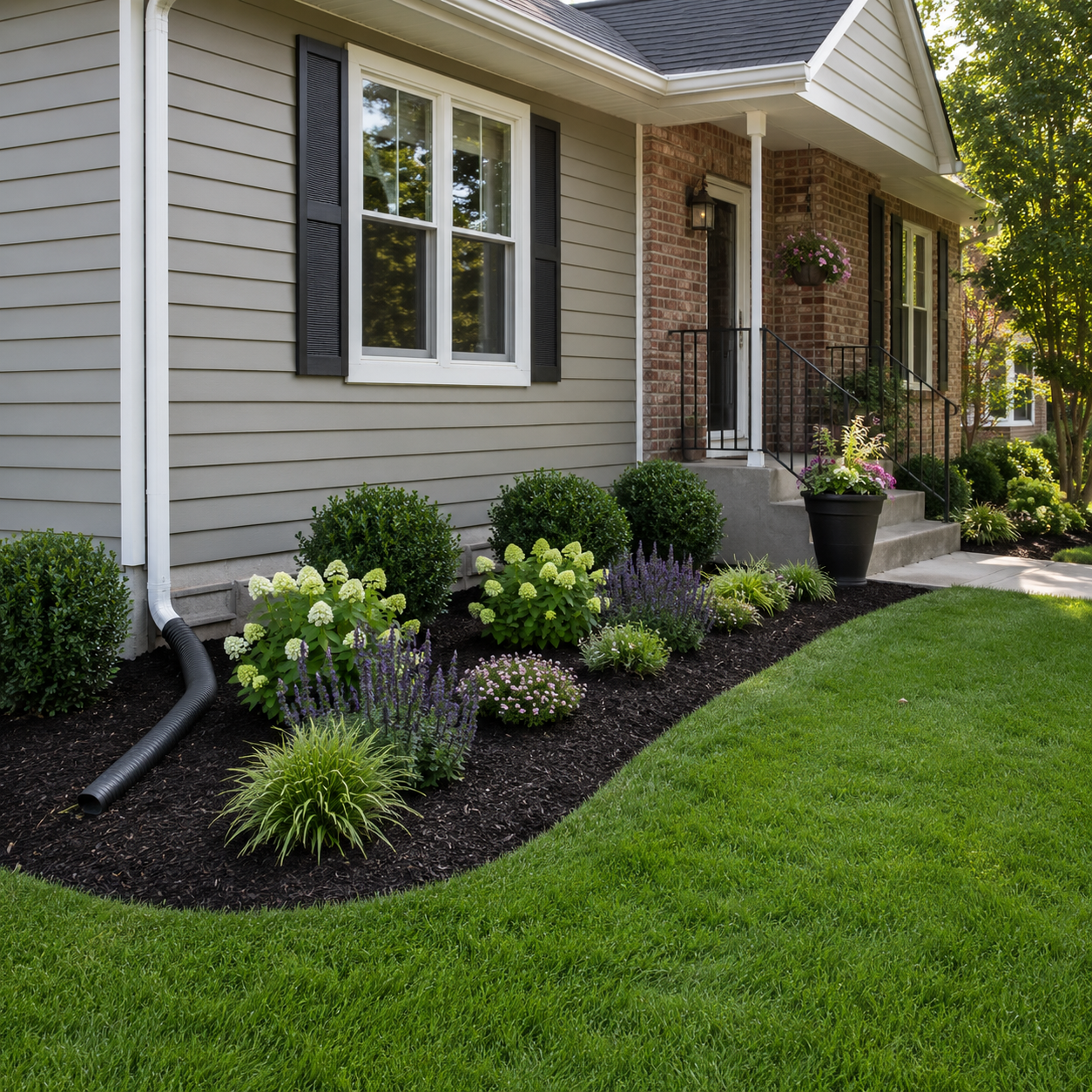
7. Create a Clean Edge Before Adding More Plants
A defined boundary between lawn and mulch can make an existing bed look deliberate. Use a spade or half-moon edger for a simple cut edge, or install a restrained edging product where soil regularly spills onto pavement.
Before choosing permanent edging, check whether mower wheels can pass beside it and whether frost movement or trimming will create extra work.
8. Mulch in a Shallow Layer
Mulch helps cover bare soil, moderate temperature, conserve moisture, and reduce weed germination. It should not be piled against trunks or shrub stems.
The University of Minnesota Extension recommends a two- to three-inch mulch layer around trees while keeping mulch away from the trunk. A wide, shallow ring is preferable to a mulch “volcano.” University of Minnesota Extension
Remove old compacted mulch before automatically adding another full layer. Keep the tree’s root flare visible.
9. Direct Downspout Water Away from the Foundation
A new bed should not hide a drainage problem. Watch what happens during rain and note whether water pools beside the house, cuts through mulch, or crosses the walkway.
A compatible downspout extension or splash block can direct roof water toward a suitable discharge point. The correct destination depends on the property, local rules, grading, and neighboring land. Do not direct runoff toward another building or create a slippery route across a path.
10. Use One Focal Point
Choose one place for seasonal color: the porch, a mailbox planting pocket, or a small bed near the entrance. Repeating bright containers, ornaments, and flower beds in every open space can make a modest yard feel cluttered.
If using a planter, select one with drainage and a stable base. Leave mailboxes, utility equipment, and address visibility compliant with local requirements.
11. Add Only the Lighting the Entrance Needs
Low lighting can clarify the front steps and approach without turning the yard into a brightly illuminated display. Place fixtures where they support visibility and avoid glare toward windows, drivers, and neighboring homes.
Solar lights are easiest to install but depend on receiving adequate sunlight. Low-voltage wired fixtures may provide more consistent output but require an appropriate outdoor system and safe installation.
12. Water New Plants Without Soaking the Building
New shrubs and perennials need attention while roots establish. A short length of drip tubing or a slow watering wand can target the root zone without repeatedly spraying siding and windows.
Check the soil rather than watering automatically. Soil type, rainfall, sun, and plant size change how quickly a bed dries.
A Practical Weekend Order
Complete the work in an order that prevents redoing it:
- Mark utilities and confirm local requirements before digging.
- Correct downspout or grading concerns.
- Remove failing plants and define the bed edge.
- Repair lawn areas that are still suitable for grass.
- Position plants at mature spacing before planting.
- Install watering components.
- Apply a shallow mulch layer.
- Add one planter or lighting feature only if it solves a remaining need.
A successful simple landscaping front yard update is usually quieter than expected. A healthy lawn area, one properly proportioned bed, repeated plants, controlled runoff, and a clean edge can improve the entrance without creating a demanding new maintenance routine.
✅ Last Updated on September 28, 2026 by BIG Smart Team