
A pool can be the most enjoyable part of a backyard and still become difficult to maintain. Leaves collect in the water, insects make evening use uncomfortable, the deck becomes too hot, and nearby homes reduce privacy.
The right Pool Enclosure Designs address the problems that matter most without making the backyard feel closed in. Before choosing a structure, consider climate, local building requirements, maintenance, and how the area will be used.
1. Screen Enclosures for Leaves and Insects
A screened enclosure is useful in warm climates where insects and falling debris frequently interrupt pool use. Fine mesh allows airflow while reducing the amount of leaves, twigs, and insects entering the area.
Screening does not eliminate pool maintenance. Fine dust, rainwater, and small debris can still pass through, but routine cleaning may become more manageable.
Look for:
- Corrosion-resistant framing
- Replaceable screen panels
- Accessible doors
- Adequate roof slope and drainage
- Screen material suited to local wind conditions
Small screen tears should be repaired before they expand.
2. Partial Roof Designs for Better Shade
A fully screened roof does little to block intense sunlight. If the main problem is an uncomfortable deck, a design that combines screening with a covered seating section may be more useful.
A solid roof, pergola, or retractable canopy can shade loungers while leaving part of the pool open to sunlight. This prevents the entire area from feeling dark.
Place shade where it is needed during the hottest part of the day rather than choosing its location based only on appearance.
3. Compact Enclosures for Narrow Backyards
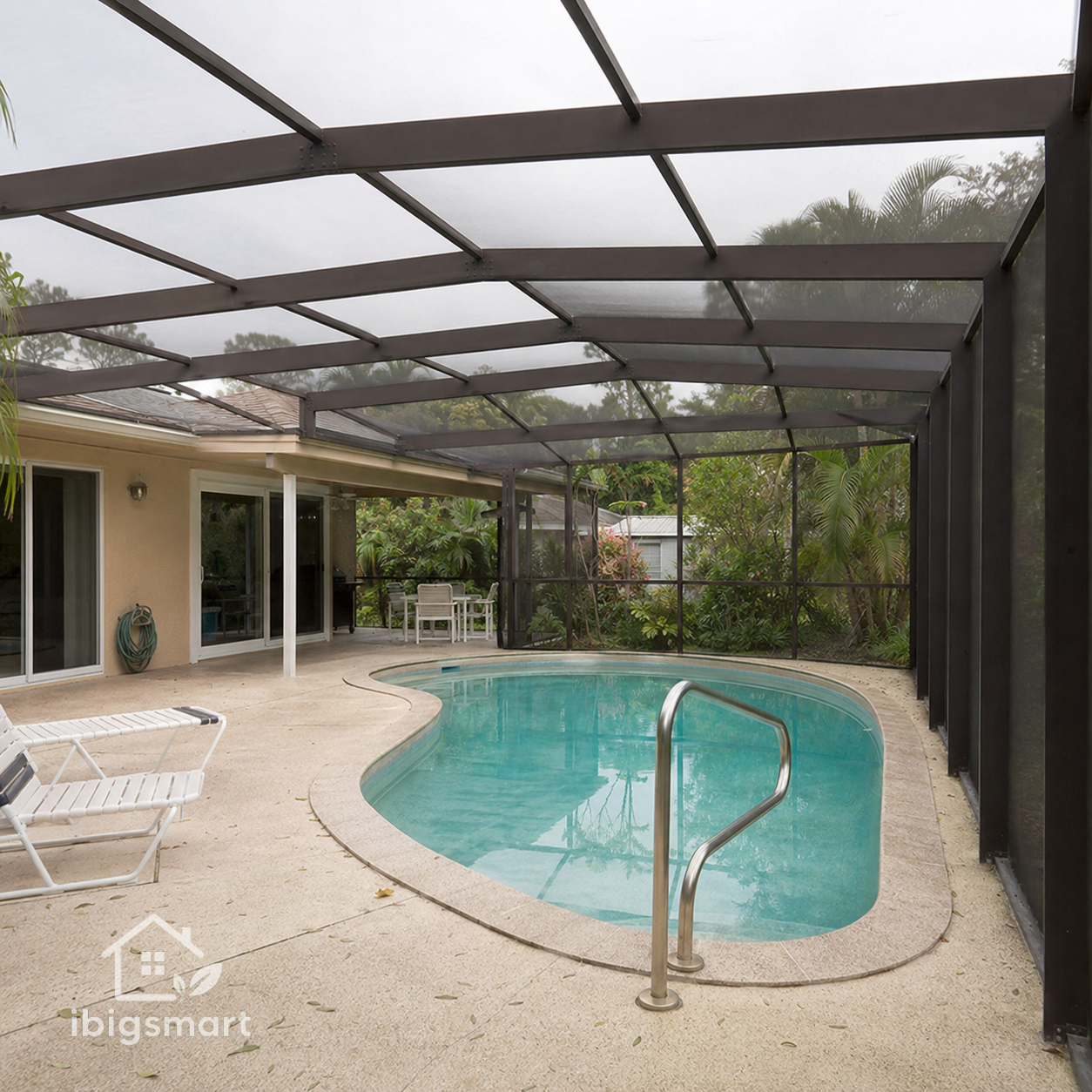
A small pool does not always need a large structure. In a narrow yard, an enclosure that follows the pool deck closely can preserve planting space and keep the frame from overwhelming the home.
Before planning the footprint, measure:
- The walking area around the pool
- Door clearance
- Space needed for maintenance equipment
- Furniture depth
- Access to pumps and filters
- Required setbacks
Avoid placing chairs where they narrow the primary walking route.
4. Enclosures with a Separate Lounge Zone
Pool furniture, towels, toys, and cleaning equipment can make the deck feel crowded. Dividing the enclosure into a wet zone and a dry lounge zone can improve organization.
Keep absorbent cushions away from frequent splashing and provide a defined place for towels and small pool supplies.
A weather-resistant storage bench can serve as seating while keeping clutter away from the pool edge. Pool chemicals, however, require storage appropriate to their labels and should not be placed casually inside a general-purpose deck box.
5. Privacy Without Blocking the Entire Enclosure
Standard pool screening may soften the view but does not guarantee privacy. If neighboring windows overlook the pool, add privacy only where it is needed.
Possible solutions include:
- Denser privacy mesh on selected wall panels
- Outdoor curtains around a seating area
- Tall container plants placed away from walking routes
- A privacy screen positioned outside the enclosure
- Frosted panels where local regulations permit them
Avoid covering every panel without considering airflow, wind load, and visibility around the pool.
6. Doors That Do Not Create a Safety Weak Point
The enclosure door is one of the most important parts of the design. It should close reliably and should not become an obstacle during normal use.
Depending on local requirements and household needs, a door may require self-closing hardware, a self-latching mechanism, or a latch positioned at a specified height.
An enclosure should never be assumed to replace legally required pool barriers. Local codes determine what qualifies as a compliant safety system.
7. Flooring That Handles Water Safely
A beautiful enclosure is difficult to enjoy if the floor becomes dangerously slippery.
Existing concrete can sometimes be improved with a suitable nonslip coating. Outdoor mats may help in limited locations, but they should lie flat, drain properly, and not create a tripping hazard.
Choose materials that tolerate:
- Pool water
- Direct sunlight
- Cleaning products
- Standing moisture
- Frequent foot traffic
8. Lighting for Evening Pool Use
Bright overhead lighting can create glare on the water and attract attention from neighboring homes. Layered, low-level lighting is usually more comfortable.
Focus lighting on:
- Steps
- Changes in deck height
- Enclosure doors
- Main walking paths
- Seating and storage areas
Use products rated for the intended outdoor and wet-location conditions. Electrical work near water should be handled according to local code by a qualified professional.
9. Storage That Keeps the Deck Clear
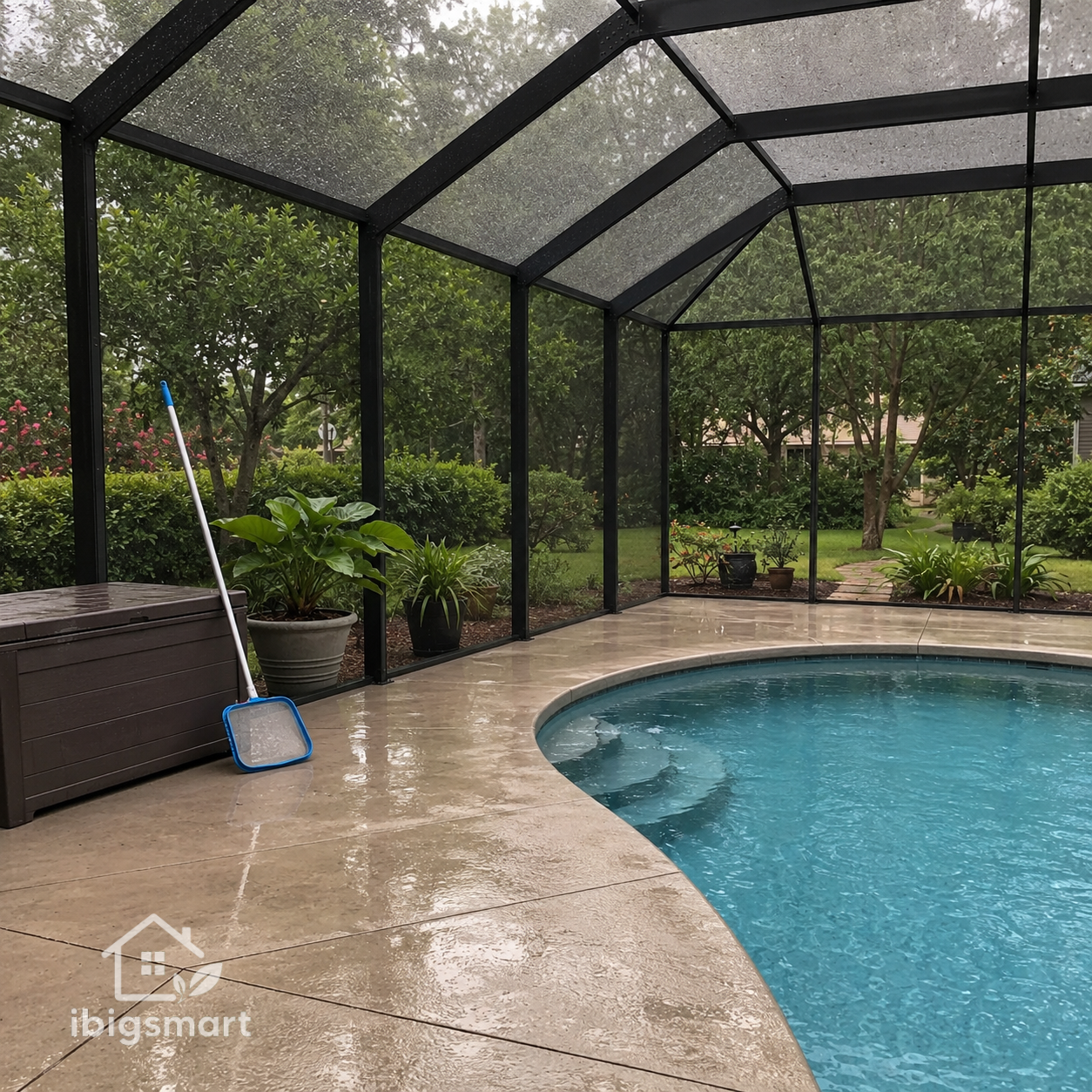
Skimmers, brushes, floats, and towels should not block doors or walking routes.
A wall-mounted organizer can hold lightweight maintenance tools, while a covered box can contain dry accessories. Confirm that storage lids and doors have enough clearance to open without extending into the main path.
10. Plan for Screen and Frame Maintenance
Even a well-designed enclosure needs inspection. Weather, tree branches, moisture, and normal use can damage mesh, loosen hardware, or stain the frame.
Check regularly for:
- Torn or loose screen panels
- Corrosion around fasteners
- Doors that no longer close correctly
- Blocked drainage
- Mildew or algae on shaded surfaces
- Branches touching the roof
A telescoping soft brush can make routine cleaning easier without using harsh tools that may damage the screen.
Before Building a Pool Enclosure
A permanent pool enclosure is not a casual DIY project. The design may be affected by building permits, wind ratings, structural engineering, property setbacks, electrical rules, and pool-barrier requirements.
Before hiring a contractor:
- Confirm local permit requirements.
- Ask whether engineering documents are included.
- Check the proposed wind and weather rating.
- Request details about screen replacement.
- Verify door and barrier compliance.
- Review drainage around the house and pool.
- Compare written warranties carefully.
The most useful Pool Enclosure Designs solve specific problems while preserving safe movement, airflow, and access for maintenance. Start with the problem—debris, insects, sun, privacy, or storage—and choose features that directly address it.
✅ Last Updated on September 28, 2026 by BIG Smart Team